Driving in Germany: Autobahns, Priority, Parking, Winter Tyres and Rental Cars
Germany offers many rewarding road-trip routes, but everyday junctions and parking rules deserve as much attention as the autobahn. Understand unprotected turns, priority from the right, emissions-zone requirements and weather-dependent tyre rules before collecting a car.
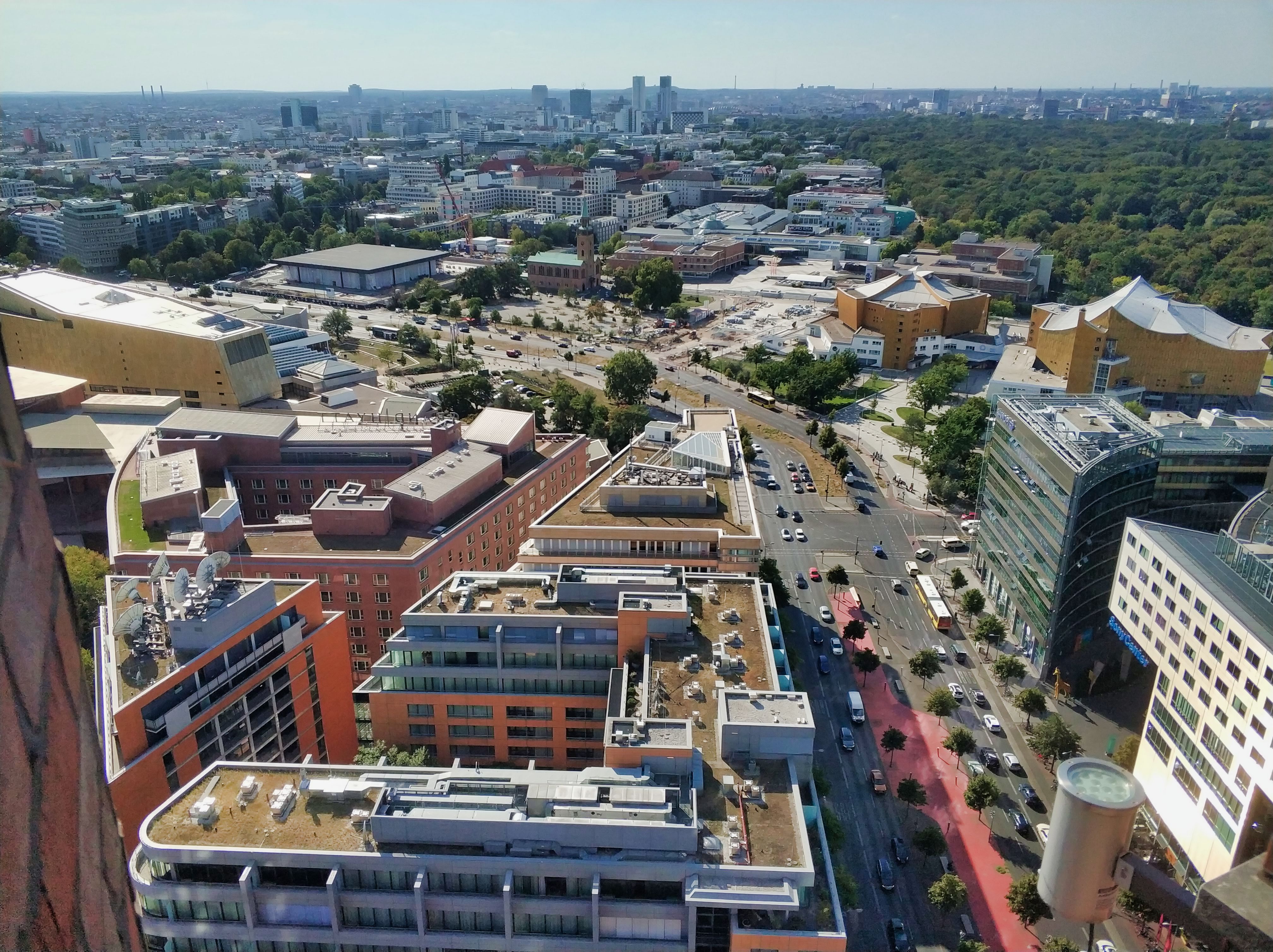
Potsdamer Platz, Berlin, Germany · packing4two
Choose a rental for the route
Use DiscoverCars to compare rental options, then check the actual supplier, deposit, excess, fuel policy and winter equipment. Establish whether extra cover reimburses a charge or reduces your liability directly with the rental company.
A car may be unnecessary for a central Berlin stay. Collect it when the intercity part begins and confirm hotel parking, luggage capacity, transmission and written permission for any international border crossing.
Licences and rental documents
Bring your original valid licence and passport. Recognition and translation requirements depend on the issuing country and licence format; an international permit accompanies rather than replaces the original. Confirm the requirements with the supplier before travelling.
Taking up normal residence differs from a short visit: a non-EU/EEA licence is generally subject to a six-month recognition period after normal residence begins, with defined exceptions. Rental age, licence experience and deposit-card rules remain separate contract conditions.
Left turns at a normal green light
An ordinary circular green can leave a left turn unprotected. Yield to opposing vehicles going straight or turning right. Do not assume that their signal is red simply because yours is green.
Turning drivers also need to account for cyclists alongside them and pedestrians crossing the road they are entering. A dedicated arrow or other traffic arrangement can establish a different phase; identify your own signal and lane before moving.
Right turns on red are an exception
There is no general permission to turn right on red. A fixed green-arrow sign on a black background beside the signal allows a right turn from the right lane only after stopping completely and yielding to all conflicting road users. A bicycle-only version does not apply to cars.
You are not obliged to use the conditional turn. A lit directional signal is different from the fixed sign. Red and amber together still mean wait, not start.
Priority from the right and roundabouts
At an otherwise uncontrolled junction, priority is generally to traffic from the right. A road that looks larger is not automatically the priority road. A yellow diamond marks priority, and an additional diagram can show the priority route turning.
At a roundabout signed with both the roundabout and give-way signs, yield to circulating traffic. Circulation is anticlockwise. Do not indicate on entry to that signed roundabout; indicate when leaving, follow the lane markings and avoid cutting across another lane.
Autobahn limits and lane discipline
For an ordinary passenger car without a trailer, defaults are 50 km/h in built-up areas and 100 on ordinary non-urban roads. Some autobahn and other qualifying sections have no general limit, but fixed and electronic speed signs are binding. The recommended speed on unrestricted qualifying sections is 130 km/h.
Keep right and return after overtaking. A car approaching in the left lane may be travelling much faster than expected. Trailers and heavier categories have different limits, and conditions always require a controllable speed.
Make an emergency corridor early
On motorways and non-urban roads with at least two lanes in one direction, stationary or walking-pace traffic must form a Rettungsgasse. The far-left lane moves left; every other lane moves right, leaving the corridor between the leftmost lane and the one beside it.
Do this before an emergency vehicle arrives. Do not follow an ambulance through the corridor or use the shoulder as an ordinary lane. Never enter a junction at green if you would block it.
Parking signs, discs and apps
Bewohner refers to residents, and supplementary signs may restrict hours or permit holders. A Parkscheibe requirement calls for a compliant parking disc set according to the rules, not simply an app payment. Ask the rental company to provide a disc when needed.
The EasyPark app and Parkster app are among options in Berlin, depending on the location. Enter the exact plate and zone, review service charges and confirm activation. Payment never authorises a prohibited or reserved space. Private car parks apply their own conditions.
Emissions zones and the green sticker
Check an Umweltzone’s requirements before entering. In Berlin, ordinary cars generally need the appropriate green emissions sticker displayed on the windscreen, including foreign-registered cars. A holiday visit is not an exemption.
Ask the rental company to confirm the actual car’s compliance and matching plate details. Certain electric vehicles have specific exceptions, and other cities can impose additional restrictions. A green sticker does not cancel every local access prohibition.
Tolls and international routes
Ordinary passenger cars do not pay a general German autobahn toll. Individual tunnels, private roads and parking can still charge. Toll Collect concerns legally specified vehicle categories by weight and use, not automatic registration of every small rental car.
Austria, Switzerland and other neighbouring countries have separate toll or vignette arrangements. Rental permission to cross the border does not include those payments automatically. Check the planned roads before crossing.
Winter tyres and visibility
Winter-tyre obligations depend on wintry road conditions, including snow, ice and slush, not merely a calendar date. Since October 2024, M+S alone is insufficient: suitable tyres need the Alpine mountain-and-snowflake symbol. Foreign-registered cars are covered too.
Inspect the supplied tyres and establish any mountain chain requirements. With snow chains, the maximum is 50 km/h or less when conditions require. Visibility below 50 metres in fog, rain or snow also limits speed to no more than 50 km/h, sometimes substantially less.
Petrol, diesel and EV charging
Super E5 and Super E10 are petrol; Diesel is diesel fuel. Match the vehicle label rather than a familiar pump colour. Comparison apps can help with changing fuel prices, but verify the pump price before starting.
The EnBW mobility+ app supports finding chargers, selecting connectors, activating sessions and paying with a supported card. Check tariffs, occupancy fees and partner-network charges. Type 2 and CCS2 are common, but confirm the actual vehicle and station and keep a backup charging plan.
Children, alcohol and assistance
In an ordinary private car, children under 12 who are also shorter than 150 cm need a suitable restraint, subject to statutory exceptions. Continue to check belt fit after the minimum legal requirement ends. Reserve seats by height and weight as well as age.
The general alcohol threshold is 0.5 g/l of blood, with no-alcohol rules for drivers under 21 and those in the probationary period. Impairment can bring liability below the general threshold. Not drinking is the straightforward option. Emergency help: 112; police: 110. Keep the rental assistance number and confirm the car’s safety equipment.
We stayed at Novotel Berlin Mitte and found it an excellent, conveniently located base. Compare room types, the full price and cancellation terms for your dates. Check Novotel Berlin Mitte