Electricity in the UAE: Type G sockets, travel adapters and voltage checks
The UAE uses Type G sockets and a 230V, 50Hz electricity supply. Prepare for three rectangular pins in Dubai, Abu Dhabi and the other emirates. Whether you need only a plug adapter or a different voltage solution depends on your appliance, not your nationality. Read the input label before connecting equipment, even if you have used it abroad before.
Recognising the local socket
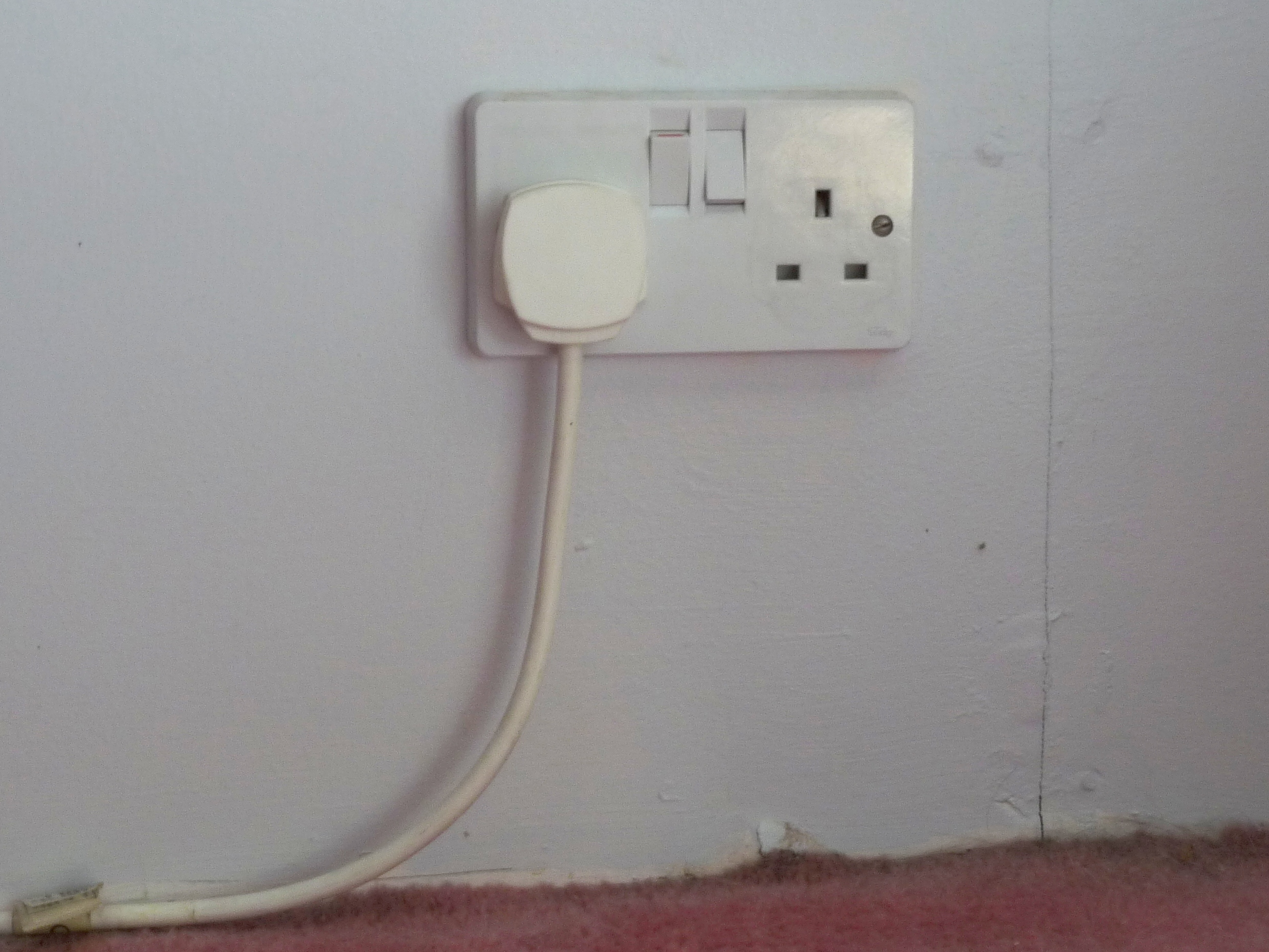
Type G is often called the British-style socket. Its three rectangular openings form a triangular arrangement. The photographs show the matching plug and outlet so you can recognise the standard when buying an adapter. A hotel advertising a universal outlet does not establish what you will find in every room or at your next accommodation.
Many outlets have a separate switch. If a connected charger does not work, check that switch and any room-key power control before assuming the adapter has failed. Ask reception if the room’s arrangements are unclear rather than experimenting with unfamiliar electrical fittings.
Choose an adapter for your actual plug
A compatible Type G plug can connect without a shape adapter, provided the appliance’s electrical rating is suitable. Other plug shapes need an adapter that explicitly accepts that plug and ends in Type G. For an appliance requiring protective earth, the complete connection must preserve it.
Do not force round pins into rectangular openings or insert an object into the earth opening to defeat safety shutters. A product described simply as a European adapter may not accept every three-pin plug. Test the fit with the chargers you intend to pack, and choose a reputable product with a clear electrical rating.
An example of the Type G outlet used in the UAE, with individual switches. This illustrates the socket standard, not a particular hotel. · Thryduulf · CC BY 3.0 · Unmodified

.png)
Type G plug and socket with three rectangular pins. Appliances with other plug shapes require a suitable adapter even when their voltage rating is compatible. · Ukpluggerrr · CC BY-SA 4.0 · Unmodified
.png)
Read INPUT, not OUTPUT
An adapter changes the physical connection; it does not convert voltage or frequency. On a charger, an INPUT rating such as 100–240V, 50/60Hz generally indicates compatibility with the local supply, subject to the manufacturer’s instructions. OUTPUT describes what the charger delivers to the device and is not the mains rating to compare.
Many phone and laptop chargers support multiple voltages, but check the individual unit. Equipment marked only 110–120V must not be connected to 230V through a simple adapter. It needs an appropriately specified voltage solution or a suitable replacement. A change of plug shape alone cannot solve that mismatch.
Hair appliances and other high-power equipment
A hair dryer or straightener can draw far more power than a phone charger. Even with compatible voltage, the adapter must be rated for the load. A 13A marking associated with a Type G plug does not make every travel adapter using that shape suitable for the same current.
Check whether the hotel supplies a suitable hair dryer instead of loading a compact adapter or extension block with heating appliances. Do not stack adapters. Stop using a loose, discoloured or unusually hot connection, or one with an unusual smell, and alert the accommodation staff. Do not improvise a fuse replacement or attempt socket repairs.
A workable charging setup for the whole family
Count the devices that will need charging together: phones, a camera, a power bank and perhaps a laptop. A reputable multiport USB charger can reduce the number of adapters, but check its total output and how power is shared when several ports are occupied. A laptop may need substantially more power than a phone.
Pack the right cables, an adapter spare and one charger in an accessible arrival-day bag. Do not rely entirely on wall-mounted USB ports: connector type and charging speed vary. Labelling family chargers also makes it easier to check the room before leaving and avoid taking the wrong cable for a day out.
Heat, beaches and pools
Keep phones and power banks out of direct sun and parked vehicles. Charge on a ventilated surface rather than under bedding or inside a closed bag. If a device reports excessive temperature, let it cool before continuing; charging harder is not a solution to overheating.
Dry your hands and equipment after a swim before plugging anything in. Do not use a wet charger or run a charging cable through a wet area. A bathroom outlet labelled for shavers is not a general-purpose supply for a hair dryer or a collection of chargers. Ask for a suitable dry location if the room layout makes charging awkward.
If the electricity goes off
For a room-only interruption, ask reception whether there is a local fault or a room-key power issue. If you see water near an outlet, scorching or other damage, leave the equipment alone and report it. Electrical faults should be handled by qualified personnel, including after unusually heavy rain.
A charged power bank and booking details saved for offline use provide useful backup. Travellers depending on powered medical equipment should agree supply and backup requirements with the accommodation and equipment provider before arrival. A building generator does not automatically guarantee power to every guest-room socket. Electricity suppliers differ between emirates.
Desert accommodation and vehicle charging
Before booking a remote camp, ask whether there is a socket near the bed, whether power remains available overnight and whether your camera or essential equipment can be charged. The word camp covers very different accommodation standards; ask about the specific need rather than merely whether lighting is provided.
In a rental car, check whether the USB ports are USB-A or USB-C and bring matching cables. A phone-charging port does not necessarily power a laptop. Electric cars use dedicated charging equipment and connectors: your Type G travel adapter for a phone charger is not car-charging equipment. Pack around your actual devices and itinerary, including the first day away from the hotel.