Driving in Thailand: Left-Hand Traffic, Car Hire, Tolls and Safety
Thailand drives on the left. A rental can suit a planned route beyond Bangkok, but busy roads, motorcycles and heavy rain demand patient driving. For city days or routes outside your comfort zone, a local driver can be a practical alternative.
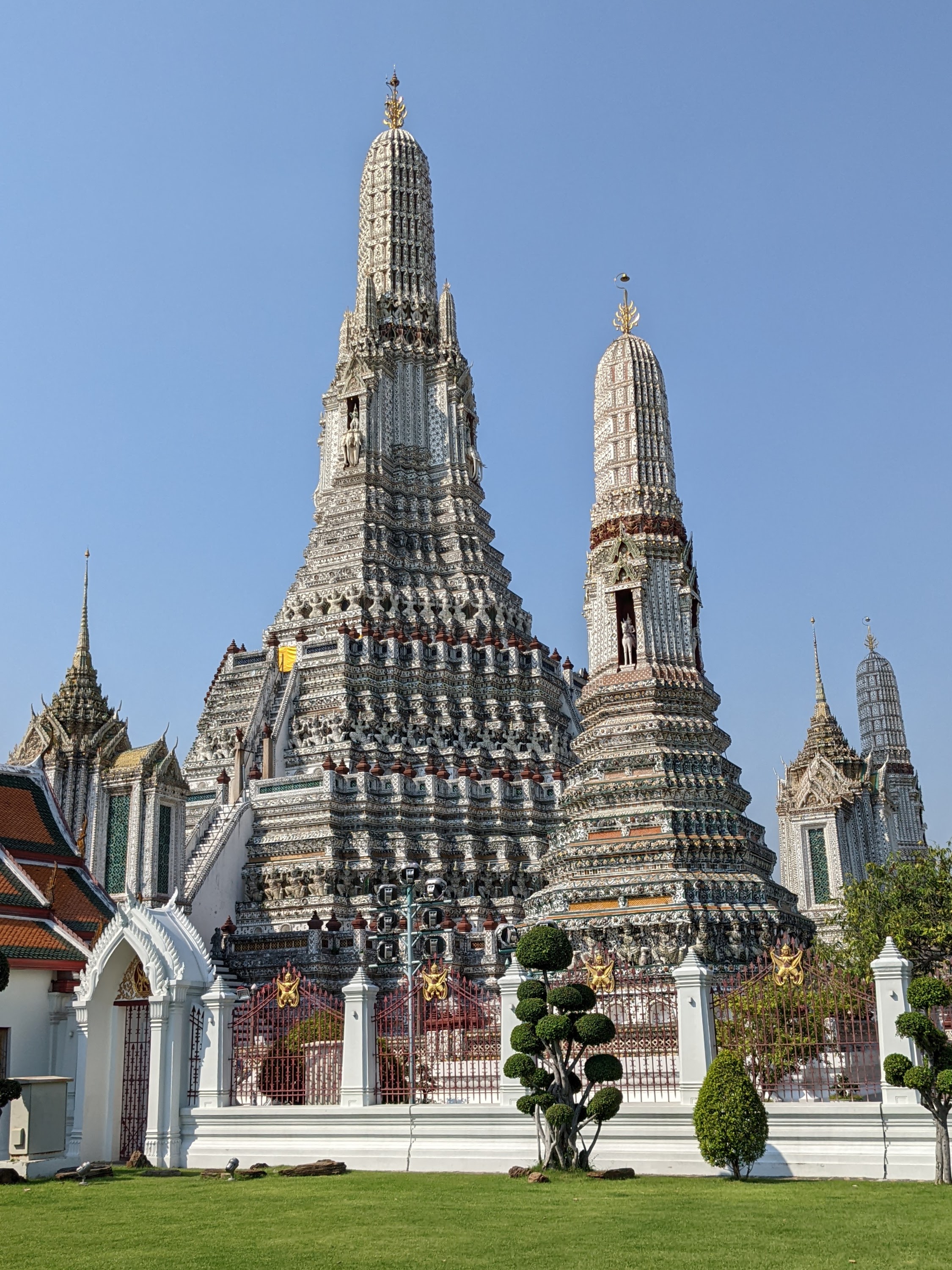
Wat Arun, Bangkok, Thailand · Jpatokal · CC BY-SA 4.0

Match the rental to your route
Compare Thailand car hire on DiscoverCars, selecting the actual pickup location. Check excess, glass and tyre cover, deposit and restrictions on ferries or unpaved roads. A low rate does not guarantee suitability for every island road.
A car is not essential for several Bangkok days: traffic and parking can turn short distances into long journeys. Rent only for the self-drive portion if appropriate, and avoid beginning unfamiliar driving immediately after an exhausting flight.
A car licence does not cover every scooter
Carry your original licence and a valid international driving permit appropriate to the vehicle. Thailand recognises permits under the 1949 and 1968 conventions, but supplier and insurance conditions also matter. A commercial digital certificate is not automatically a substitute for an official permit.
A car entitlement alone does not authorise a motorcycle requiring a motorcycle licence. A shop’s willingness to rent proves neither legal entitlement nor insurance cover. Obtain suitable helmets and confirmed cover rather than learning to ride in holiday traffic.
Settle into left-hand traffic
Ordinary rental cars generally have the steering wheel on the right. Check mirrors, indicators and wipers before leaving the collection area. After turns and fuel stops, consciously re-establish your position on the left.
The turn crossing opposing traffic is the right turn. Plan lane choices early instead of crossing several lanes at the last moment. If you miss an instruction, continue to a safe alternative rather than making an abrupt correction.
Green lights and turning priority
A right turn at an ordinary green can require yielding to oncoming traffic. Check pedestrians and motorcycles as well. Stop at red unless a specific local arrangement or signal permits the intended movement; another driver’s action is not permission.
A green arrow displayed with red permits its indicated direction while maintaining required care and yielding. Do not improvise a left-on-red rule at an unclear junction. Follow directions from an officer controlling traffic over the ordinary signal.
Roundabouts and motorcycles
Roundabouts circulate clockwise: enter to the left of the central island. Without another controlling instruction, yield to vehicles already circulating from your right. Wait for a real gap rather than following the previous car closely.
Motorcycles can appear beside the vehicle even when a lane seems empty. Check mirrors and blind spots when turning or opening doors. Leave space and drive predictably; sounding a horn does not give you priority.
Speed, restraints and night driving
Distances and speeds use kilometres and km/h. Limits depend on road category, vehicle and signs; a wide road does not automatically permit 120 km/h. Allow for roadside entrances and U-turn points.
Use seat belts for everyone and obtain suitable child restraints. Prefer daylight for rural driving and do not drive after drinking. Limited visibility and wet roads justify slowing down even when surrounding drivers continue faster.
Easy Pass and road tolls
Easy Pass is an electronic toll collection system, not an ordinary bank card. Ask whether your rental has an active device, what roads it covers and how charges reach you. Without a suitable arrangement, choose an ordinary payment lane rather than an electronic-only lane.
Keep cash ready for tolls and retain receipts. Other collection systems and barrier-free sections also exist, so one device should not be assumed to cover everything. Report accidental passage promptly to the rental company to arrange payment and limit added fees.
Parking and restricted access
Ask the hotel where to park and whether it is included. Around markets, temples and beaches, prefer designated parking and establish the price and permitted duration. Do not obstruct pavements, bus stops, entrances or access roads.
There is no single parking app to assume works everywhere in Thailand. If a facility uses QR payment or an app, confirm your payment method is supported and the transaction succeeded. An open barrier does not establish free parking.
Rain, mountain roads and fuel
Tropical rain can rapidly reduce visibility and cause flooding. Do not enter water of uncertain depth or stop beneath an unstable slope. Use an appropriate gear on descents rather than riding the brakes continuously.
Show an attendant the required fuel grade. Gasohol is petrol blended with ethanol; not every vehicle accepts every blend. Follow the filler label and rental instructions rather than selecting the cheapest pump option.
EVs: verify payment before relying on a charger
PEA operates the PEA VOLTA charging network. Its PEA VOLTA app locates stations and manages charging and payment. Before choosing an EV, confirm with the rental supplier that your account, phone number and bank card will work on the networks along your route.
Foreign cards are not guaranteed to work in every charging app. Request a demonstration or supplied payment method, check connector type and a backup station, and retain battery reserve. For remote or island routes, petrol may be simpler if charging access is not verified.