Electricity in Thailand: A, B, C and O Sockets and Safe Adapters
Thailand supplies 230V electricity at 50Hz. You may encounter outlets accepting flat pins, round pins or several shapes together. A slim Europlug fits many outlets, but no single hotel socket arrangement should be assumed before checking.
Several plug systems coexist
Connections associated with Thailand are A, B, C and O. Type A has two flat pins, B adds earth, C is the slim two-round-pin Europlug and O is the Thai three-round-pin system. Combined outlets can accept more than one shape.
A socket resembling a North American outlet does not mean a 110V supply. A 110/120V-only appliance can be damaged by local voltage even when its plug fits without an adapter.
The photographs show the distinction
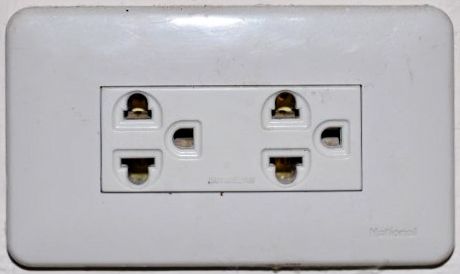
The outlet photograph illustrates a combined socket with openings for multiple plug shapes. The second photograph shows a Thai Type O plug. Three round pins do not make it interchangeable with every other three-pin system.
These are identification examples, not a promise about a particular hotel. For essential equipment, ask the property for a photograph of the actual room outlet and establish compatibility before travelling.
An example of a combined Thai outlet accepting multiple plug shapes. Mechanical fit does not prove earthing or voltage compatibility. · Peebidj; edits: plugwash, Marekich, Kontrollstellekundl · CC BY-SA 3.0 · Unmodified

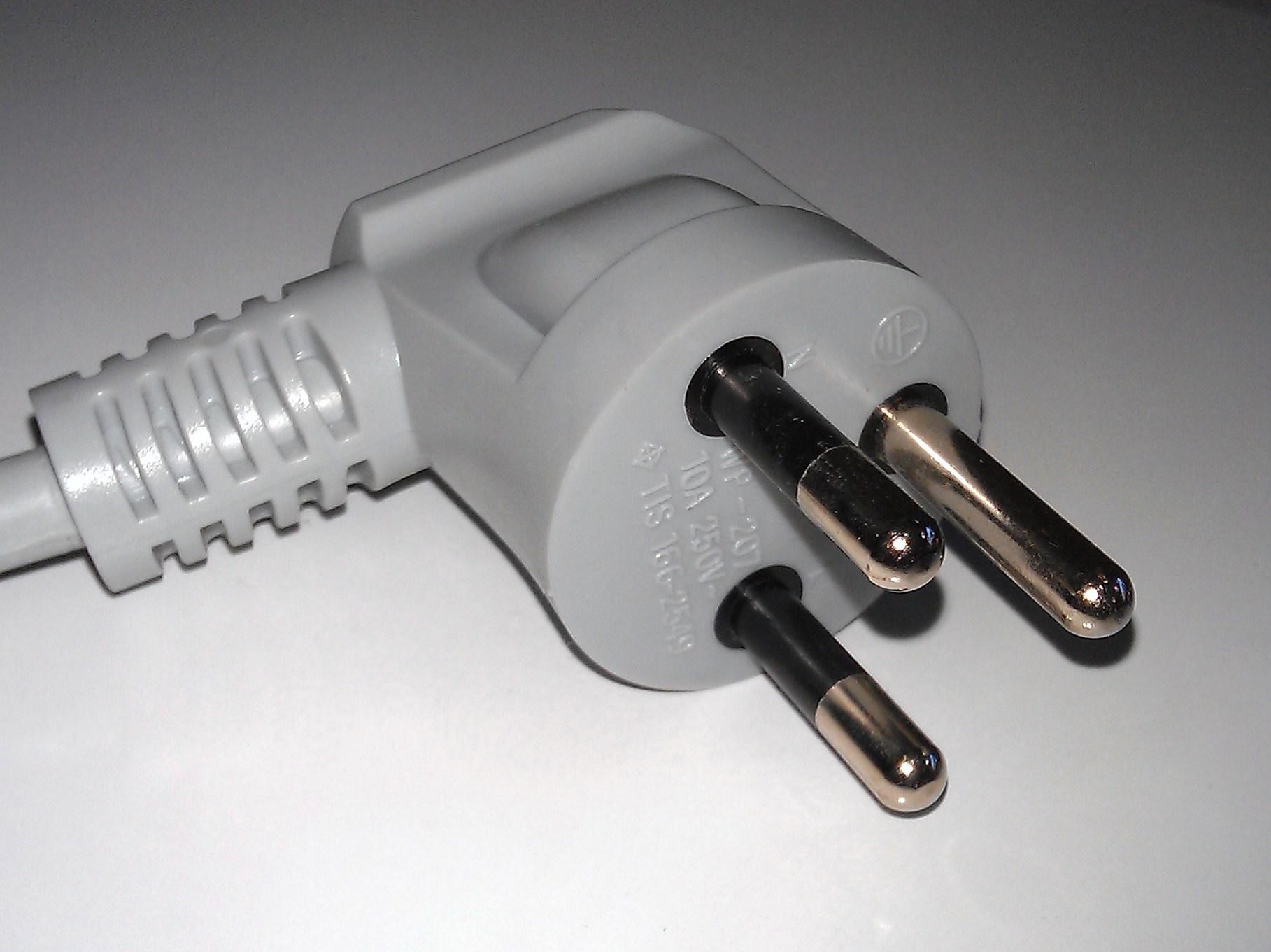
A Thai three-pin TIS 166-2549 plug, known as Type O. Its three round pins do not make it interchangeable with every other three-pin standard. · Paul_012; cleanup: Hohum · CC BY-SA 3.0 · Unmodified

Choose a suitable travel adapter
A slim Type C charger generally fits an outlet accepting C, but other sockets exist. Bring a reputable adapter explicitly supporting Thailand and your appliance’s plug. A product labelled universal may not include every Thai or home-country configuration.
Equipment needing earth requires both an earthed adapter and a suitable outlet. Never remove a third pin or improvise a loose connection. An adapter cannot create protective earthing where the installation does not provide it.
Read the charger input rating
An INPUT label of 100–240V, 50/60Hz suits the local supply. Equipment explicitly accepting 220–240V may also be suitable under its instructions. Check each appliance instead of assuming every item in your bag shares the same rating.
An OUTPUT value such as 5V describes the charger’s output, not its mains compatibility. A plug adapter changes shape, not voltage. For 110/120V-only equipment, arrange appropriate conversion or, often more conveniently, leave it at home.
High-power appliances
Hairdryers, straighteners and kettles require adequate adapter power ratings. Follow appliance instructions, and set any voltage selector while unplugged. Avoid connecting several heating appliances through one extension block.
The accommodation’s dryer or kettle may be the simplest option. Never use a shaver-only outlet for high-power equipment. Stop using a connection that becomes hot, smells burnt or sits loosely and report it to staff.
Humidity, pools and showers
Keep phones and chargers dry during beach or boat trips. Do not charge wet equipment or place extension blocks where water can collect. Allow equipment to dry in accordance with its manufacturer’s instructions.
Do not touch shower-heater wiring or attempt hotel socket repairs. Stop using damaged electrical equipment and report unusual behaviour rather than continuing because the appliance still appears to work.
Charging on travel days
A charged phone helps with ride bookings and tickets as well as navigation. Carry a power bank and spare cable for boat excursions or transfers, rather than expecting a socket in every boat, minivan or roadside stop.
A vehicle USB port is not a household socket and may charge a phone without providing enough power for a laptop. Check rental-car connectors. Follow your airline’s current packing instructions for power banks and spare batteries.
Island accommodation and power cuts
Continuous power cannot be guaranteed at every property, and rain or remote locations can bring interruptions. If reliable electricity is essential, ask whether a generator exists, what it powers and whether bedroom sockets are connected to it.
During a power cut, ask staff whether it is a property or area issue. Medical equipment or refrigerated medicine needs a confirmed backup appropriate to the manufacturer’s requirements. A phone power bank is not automatically a substitute for essential equipment power.