Electricity in Poland: Type E Sockets, Plug Compatibility and Safe Charging
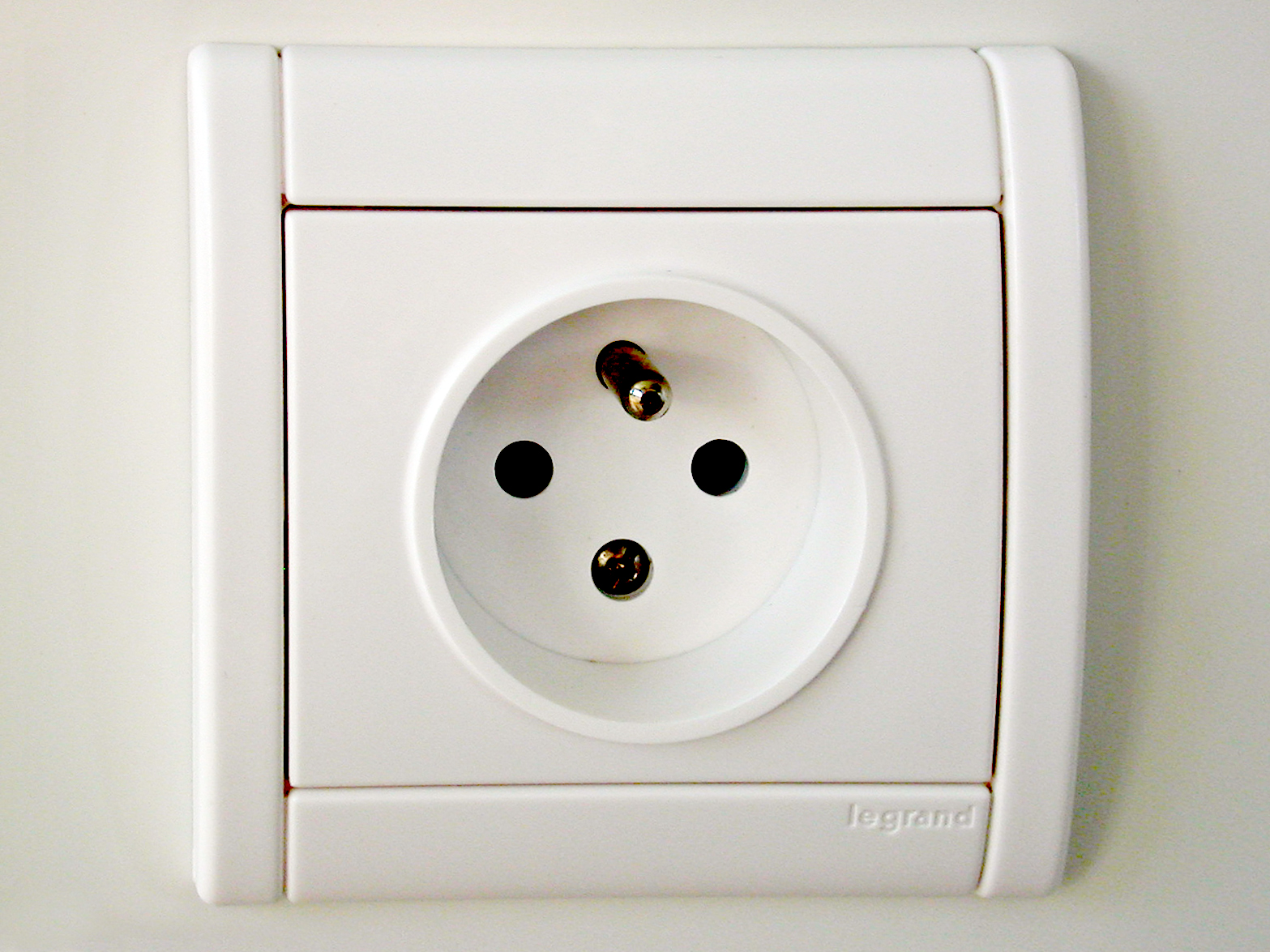
Poland uses 230V at 50Hz. Its common earthed socket is Type E, with a projecting earth pin. A slim European two-pin charger often connects directly, but an earthed appliance needs a genuinely compatible connection. Check plug shape and electrical input separately before packing.
Recognising the Type E socket
A Type E socket has two round holes and a metal earth pin projecting from the face. A compatible earthed plug has a hole to receive that pin. Slim Type C Europlugs are also used for suitable unearthed equipment.
A combined E/F plug, often called CEE 7/7, has both the receiving hole and side earth contacts. An older F-only plug without that hole may not fit. The photos show why “European plug” is not a complete compatibility description.
Which travel adaptor is needed?
British G, North American A/B, Australian I and Israeli H plugs need an appropriate connection to the local system. Choose an adaptor for your actual plug and a Type E socket. If the original equipment requires earth, the adaptor must preserve it.
A two-pin adaptor does not provide protective earth simply because it accepts a three-pin plug at the front. Never remove a pin, bend contacts or force a plug past the socket’s earth pin. A slim C charger and an earthed laptop supply can require different solutions.
A Type E socket with an earth pin projecting above the two holes. This illustrates the socket type also used in Poland; it is not a photograph from our trip. · Etienne Rastoul; corrections: Marekich and Konrad Conrad · Public domain · Unmodified


Slim Type C (a), an unearthed contour plug (b), and a combined E/F plug (c). The earthed plug needs the hole that accepts a Type E socket’s earth pin. · SomnusDe; composite: MikeRun · CC BY-SA 3.0 · Unmodified

Voltage and frequency
The ordinary supply is 230V, 50Hz. Equipment intended for a compatible 220–240V, 50Hz supply normally needs only an appropriate physical connection. Equipment rated solely for 100V or 120V must not be connected through a shape adaptor alone.
Check the rating of each device and power supply rather than relying on the country where you bought it. Motors, clocks and other frequency-sensitive equipment need a suitable frequency rating as well as the right voltage.
Read the input rating
Look for INPUT on the charger. A rating of 100–240V, 50/60Hz normally covers the Polish supply. Check camera chargers, toothbrushes and essential equipment individually, not only phones and laptops.
OUTPUT figures such as 5V or 20V describe what the charger delivers to the device. They do not tell you the wall voltage it accepts. A photograph of each input label before departure makes later checks easier.
Adaptors versus transformers
A travel adaptor changes the physical connection, not the supply voltage or frequency. A transformer or converter must match the appliance type and power demand, and does not automatically solve a frequency mismatch. Seek manufacturer advice for essential equipment.
High-power, single-voltage hairdryers and straighteners are awkward candidates for travel converters. A locally supplied appliance is usually simpler. Set any manual dual-voltage selector correctly before connecting, and do not stack adaptors to create an improvised solution.
A practical charging kit
Choose a reputable adaptor marked for Type E compatibility and the relevant current or power load. A universal label alone does not establish earthing or safe capacity. Bring a spare cable and one backup adaptor.
A quality multi-port USB charger suitable for 230V can reduce clutter. Check its total shared output if charging a laptop and several phones together. Do not assume every port delivers its advertised maximum at the same time.
Using hotel and apartment sockets
A room key-card switch may also disconnect charging sockets when you leave. Ask the property if this matters for your plans. Do not use a loose, scorched or damaged outlet, and report it rather than opening it yourself.
Charge on a dry, ventilated surface, away from bedding and sinks. Never use a travel adaptor as an EV charging solution. If medical equipment needs continuous electricity, arrange a suitable supply and backup plan with the property and equipment provider before the trip.
Outages and live information
If power fails, ask the host whether the problem affects your room, the building or the surrounding area. Keep a charged phone, a small light and offline accommodation details available. Stay away from fallen wires and wet electrical equipment.
The TAURON outage and planned-interruption page covers its service areas, not the whole country. Elsewhere, ask the host which distribution company serves the address. Severe weather can interrupt supply even where normal service is reliable.
We stayed at Mercure Wroclaw Centrum on our 2019 trip and recommend it. Compare room types, the total price and cancellation terms for your own dates. Check the hotel on Trip.com