Money in Thailand: Baht, Bank Cards, Payment Apps and VAT Refunds
Thailand uses the baht. Bank cards are useful at hotels and malls, but cash remains important for street food, markets and small journeys. A merchant QR code may not work with your home bank, and Bangkok’s rail services do not all share one ticket.
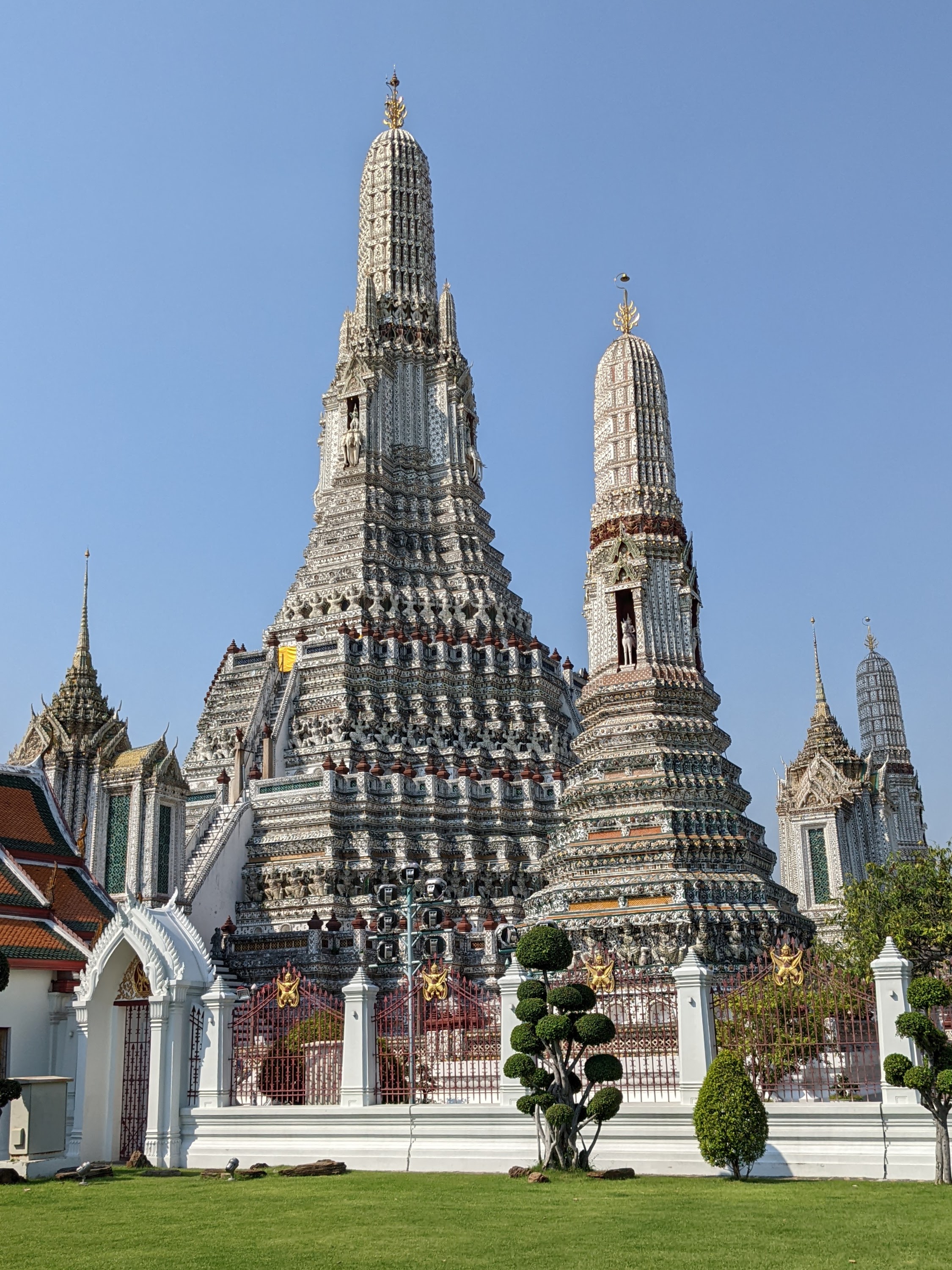
Wat Arun, Bangkok, Thailand · Jpatokal · CC BY-SA 4.0

Baht and satang
THB and ฿ mean Thai baht; one baht contains 100 satang. Ordinary banknotes are 20, 50, 100, 500 and 1,000 baht. Common coins are 1, 2, 5 and 10 baht, with 25- and 50-satang coins also used for some purchases.
Keep smaller notes for taxis and stalls. A 1,000-baht note can be inconvenient for a minor purchase when the seller has limited change. Check the denomination before handing it over and separate daily spending money from your reserve.
Plan a realistic cash reserve
There is no universal daily amount: allow for meals, local journeys and costs not prepaid. Before travelling to a small island or rural area, carry a reserve rather than depending on a single working ATM.
Keep a separate backup bank card. Ask whether a shop has a minimum card payment or an additional charge and compare the final cash and card prices. A phone wallet that works at home should not be your only payment method.
ATMs and exchange counters
An ATM operator can charge separately from your own bank. Read the fee before confirming. Compare any home-currency conversion offer with a baht transaction rather than accepting a familiar currency automatically.
At an exchange counter, establish the final baht proceeds and keep the receipt. The calculator shows a reference rate, not a guaranteed transaction. Do not carry more cash than you can store comfortably just to avoid one withdrawal fee.
PromptPay and the TAGTHAi app
PromptPay is a local payment system frequently presented as a QR code. A phone camera or foreign bank card alone does not enable payment: you need a supported bank app, account or wallet. Cash may be simpler for occasional purchases.
The TAGTHAi app offers Easy Pay for tourists. Its PAY&TOUR route involves a KBank foreign-exchange counter, passport registration and eligible funding before linking the card in the app. Check current fees, top-up methods and balance refunds; an expired free-promotion period is not a current promise.
Bangkok rail: BTS and MRT are not one ticket
BTS is the elevated Skytrain. Buy a ticket for your destination or use a Rabbit stored-value travel card under its terms, keeping your ticket until exit. The Airport Rail Link is another service, not automatically included with a BTS ticket.
MRT lines offer contactless payment using supported bank cards, with a system update in 2026. Check gate logos and confirm your card at the counter before entering. Use the same payment medium at entry and exit; switching between a physical card and its phone-wallet version can create a different transaction identity.
Taxi bookings in the Grab app
In the Grab app, enter your destination, select the vehicle service and check whether pricing is fixed or metered. JustGrab offers an upfront fare for an assigned vehicle; GrabTaxi books a taxi. Cash and bank-card options depend on the selected service.
Choose payment before booking and match the registration plate. Establish whether tolls or airport charges are included or added. For street taxis, request a meter and clarify payment before departure; agree a tuk-tuk fare before riding rather than afterwards.
Tips and service charges
Check the bill for service charges, particularly in hotels and restaurants. You can round up or leave a chosen extra amount for good service without applying your home-country restaurant percentage to every purchase.
A street-food purchase or short ride need not trigger an automatic percentage tip. For a longer guided excursion, consider service and group size and check existing charges. When paying cash, state how much change you expect before leaving a tip.
VAT and prices marked ++
VAT is 7% at the guide’s verification date, under the reduction approved through 30 September 2026. The rate needs updating before relying on this information for later dates. Shop prices normally include tax, while hotel and restaurant menus may state additional charges.
A ++ notation can mean both service and VAT are added. For example, THB 1,000 plus 10% service followed by 7% VAT becomes THB 1,177, not 1,170. Ask for the final amount and check hotel extras such as breakfast, additional beds and transfers.
Tax-free shopping paperwork
Use shops participating in VAT Refund for Tourists. Purchases must total at least THB 2,000 including VAT from the same supplier on the same day. Present your passport and request P.P.10 or the appropriate digital form with the original tax invoice.
Take eligible goods out of Thailand within 60 days through a suitable international air departure. Accommodation, meals and goods consumed during the trip do not qualify as shopping exports. Check your name and passport number on every form.
Allow time at the airport
Before checking your bag, establish whether your purchases need customs inspection and keep them accessible. Certain luxury goods also require presentation after passport control, so do not automatically put them in checked luggage.
Retain forms and receipts until reimbursement and follow the departure point’s procedure. Fees reduce refunds; a 7% VAT rate does not guarantee 7% of the whole purchase price back. Leave enough time rather than attempting the process immediately before boarding.