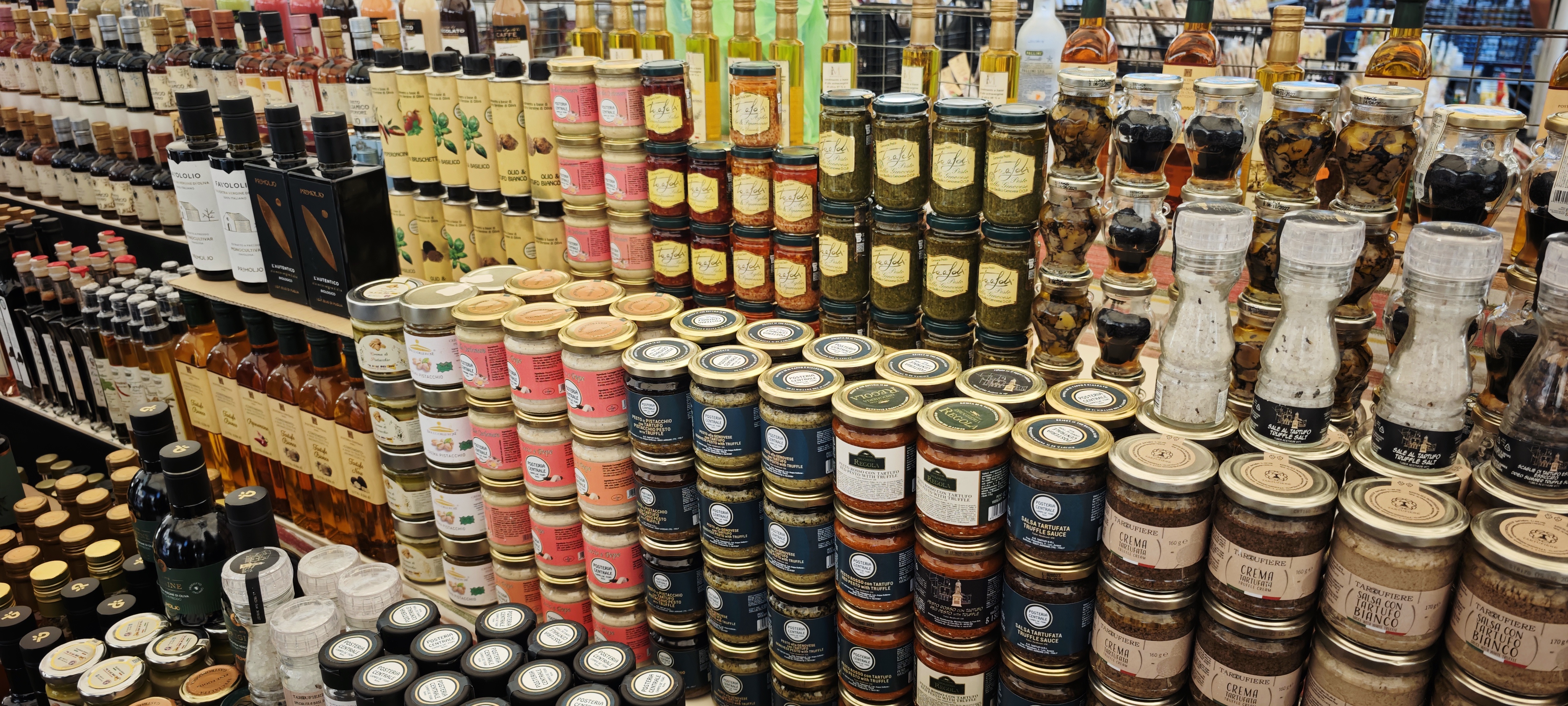
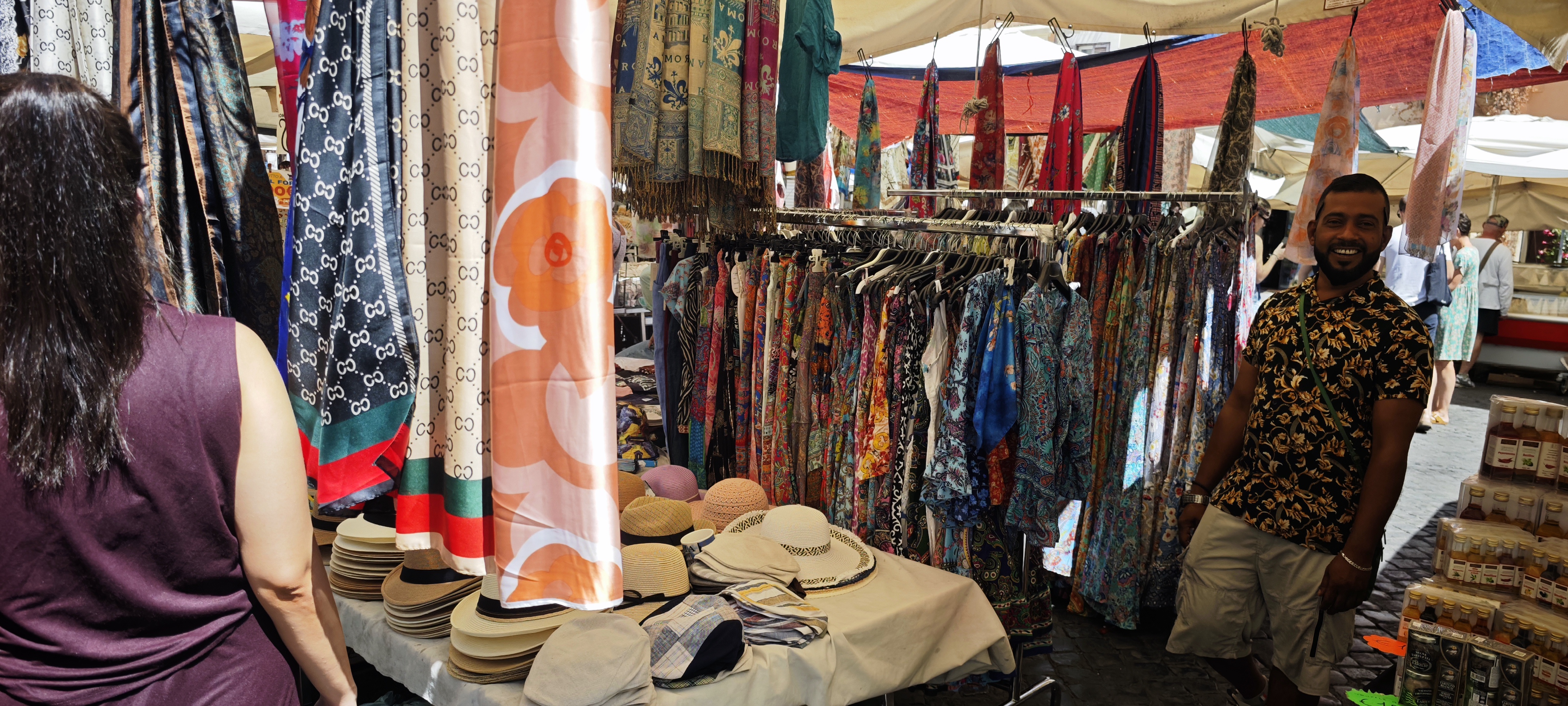
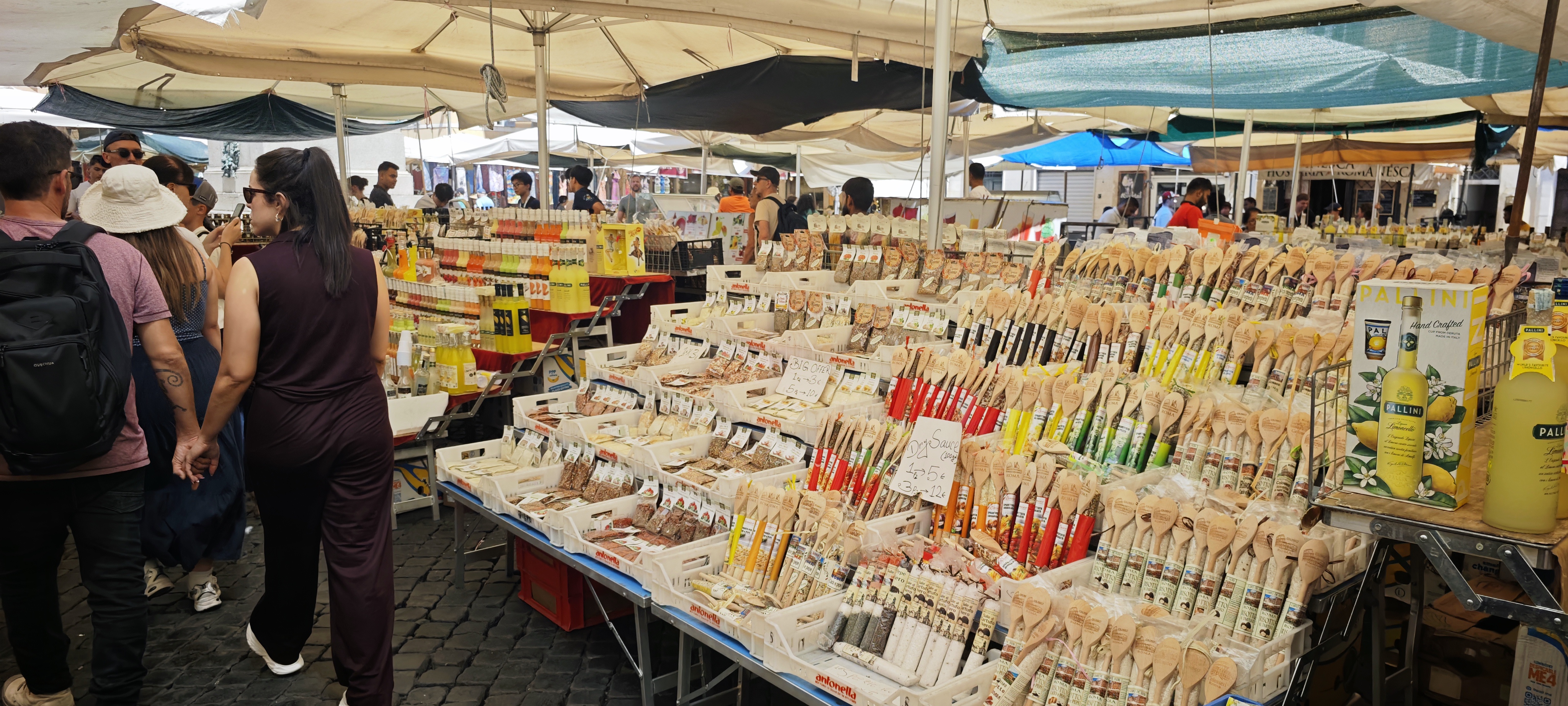
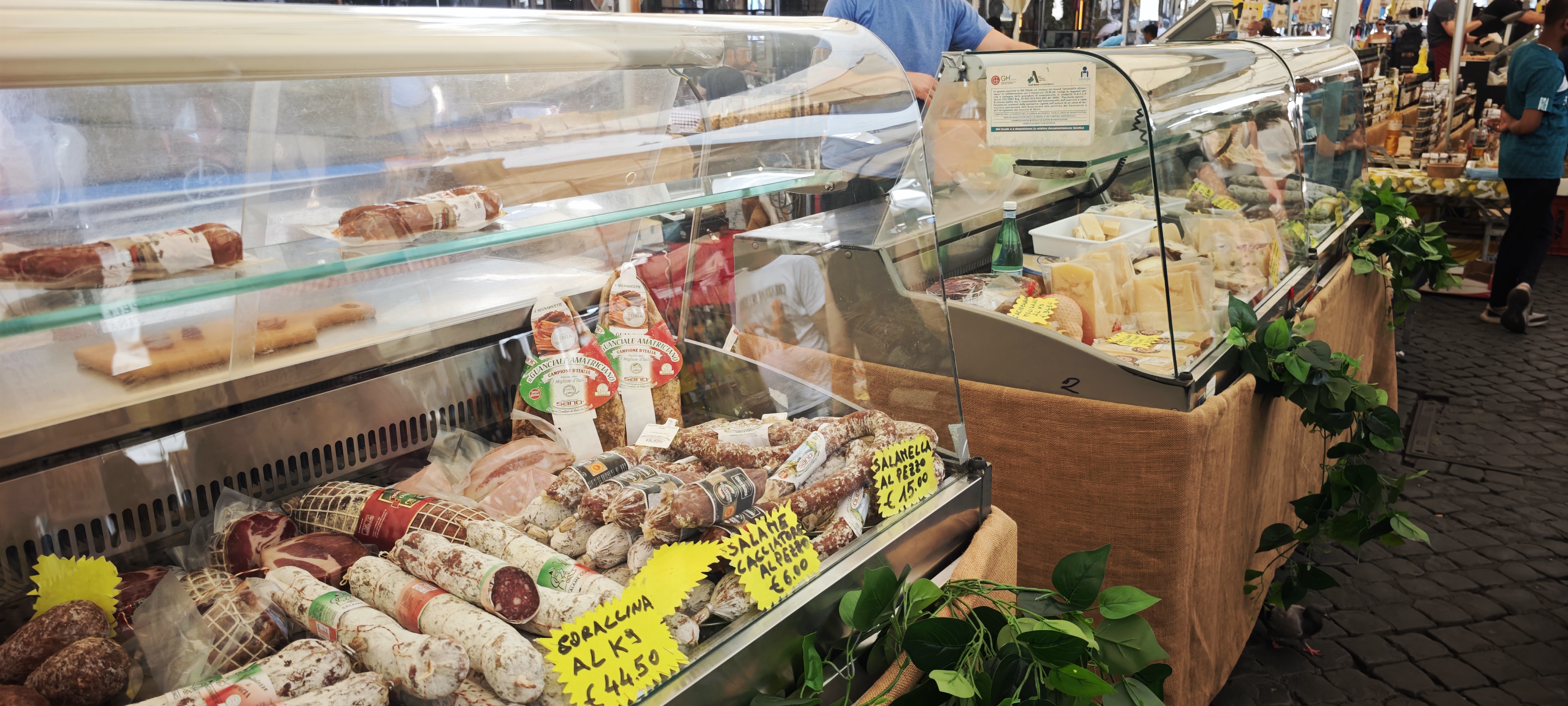
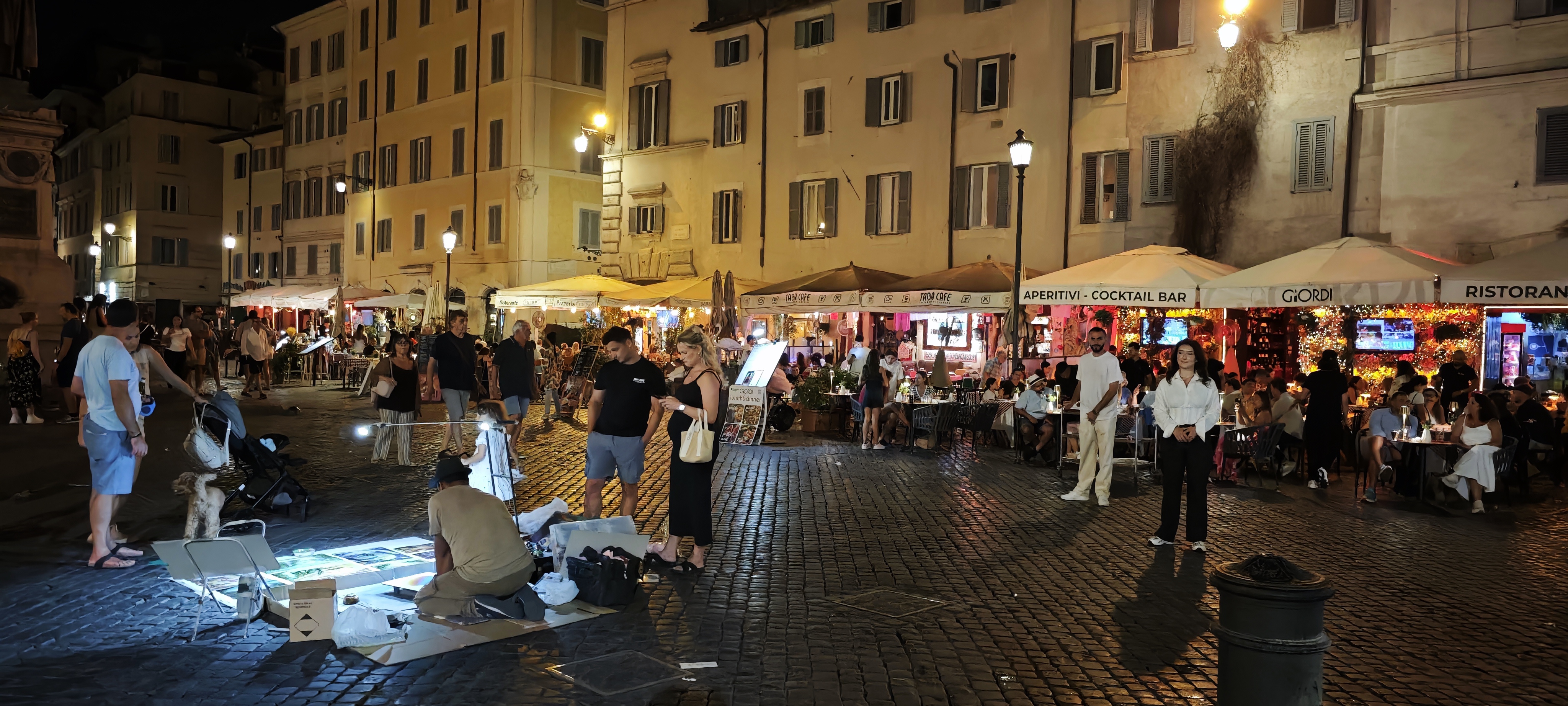
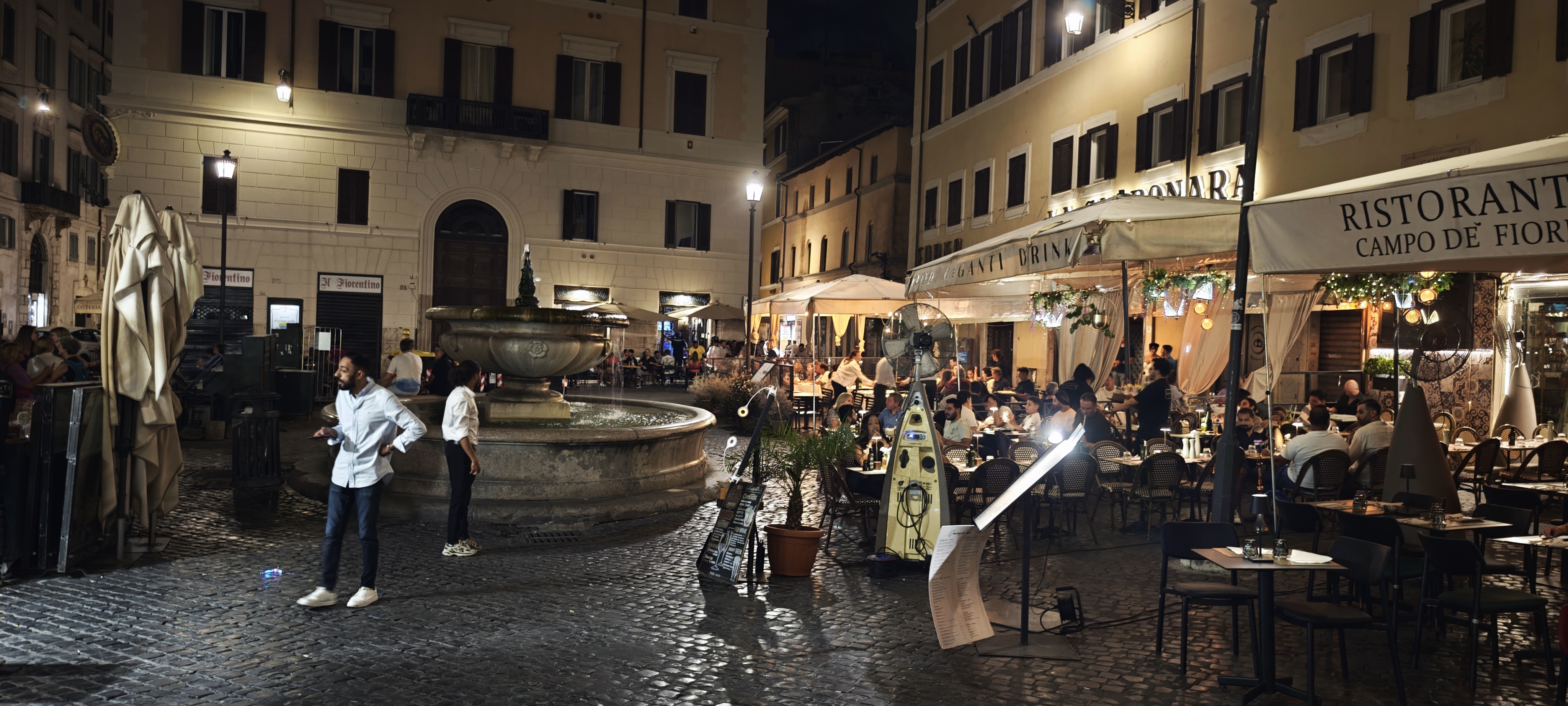
Campo de' Fiori - "Field of Flowers" - is one of Rome's most famous and historic places. In the morning, it functions as a market with fruits, vegetables, flowers, spices, and cheeses. In the evening, like other central squares in the city, it becomes an entertainment hub with bars and restaurants.
Campo de' Fiori has survived many revolutions. Originally, it was a field of wild flowers considered too close to the Tiber River, with the danger of flooding. In 1456, the square was paved by order of Pope Callixtus III. From the 16th to the 17th centuries, it was the execution site of the Inquisition.
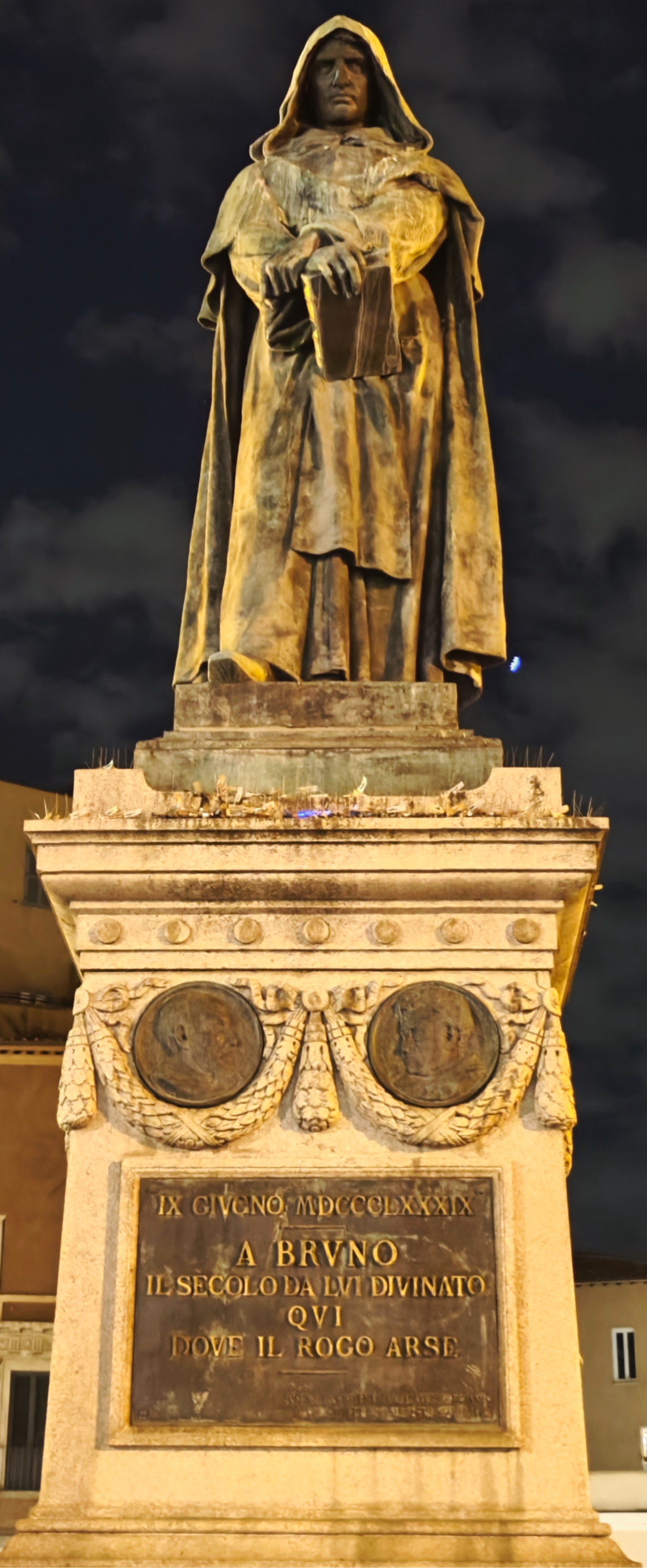
In the center of the square stands a large and menacing bronze statue of Giordano Bruno, who was burned here at the stake on February 17, 1600. Bruno was a Dominican friar, Italian philosopher and astronomer, who supported Copernicus's theory that the Earth revolves around the Sun and believed that the universe is infinite - concepts opposing the Church. For 7 years, the Inquisition tried to break him, but when he refused to repent, he was condemned as a heretic and executed in the central market.
The statue was placed there with Bruno facing the Vatican - as an act of secular defiance against the Catholic Church.

Czesław Miłosz, the Polish poet and Nobel Prize winner in Literature, wrote the poem "Campo de' Fiori" to describe the crowd's indifference to suffering and horror close to them. The poet wrote that he remembered Campo de Fiori when he saw how, in spring 1943, in Warsaw, Varsovians were enjoying themselves at an amusement park and riding a Ferris wheel, while beyond the nearby wall, the Warsaw Ghetto Uprising was taking place, where the Nazis went through and burned all the buildings.
With a colorful market, excellent food, vibrant nightlife, and a historic horror story, Campo de Fiori is one of Rome's most interesting places.


Comments