The final day of our tour in Jordan was dedicated to Petra – perhaps the country’s most famous site. The entrance ticket isn’t cheap (unless you're part of an organized tour, as we were, where it's included), but it’s clear why so many people come here.
Petra is an ancient Nabatean city founded in the 4th century BCE. The Nabateans – a nomadic people originally from the Arabian Peninsula – turned it into a key trade hub due to its strategic location between Arabia and the ports of the Mediterranean. The city flourished for centuries before it was eventually abandoned and lost to the desert. In the 19th century, Swiss explorer Johann Ludwig Burckhardt brought it back to Western awareness. Since then, Petra has been declared a UNESCO World Heritage Site and has become a central part of Jordan’s tourism.
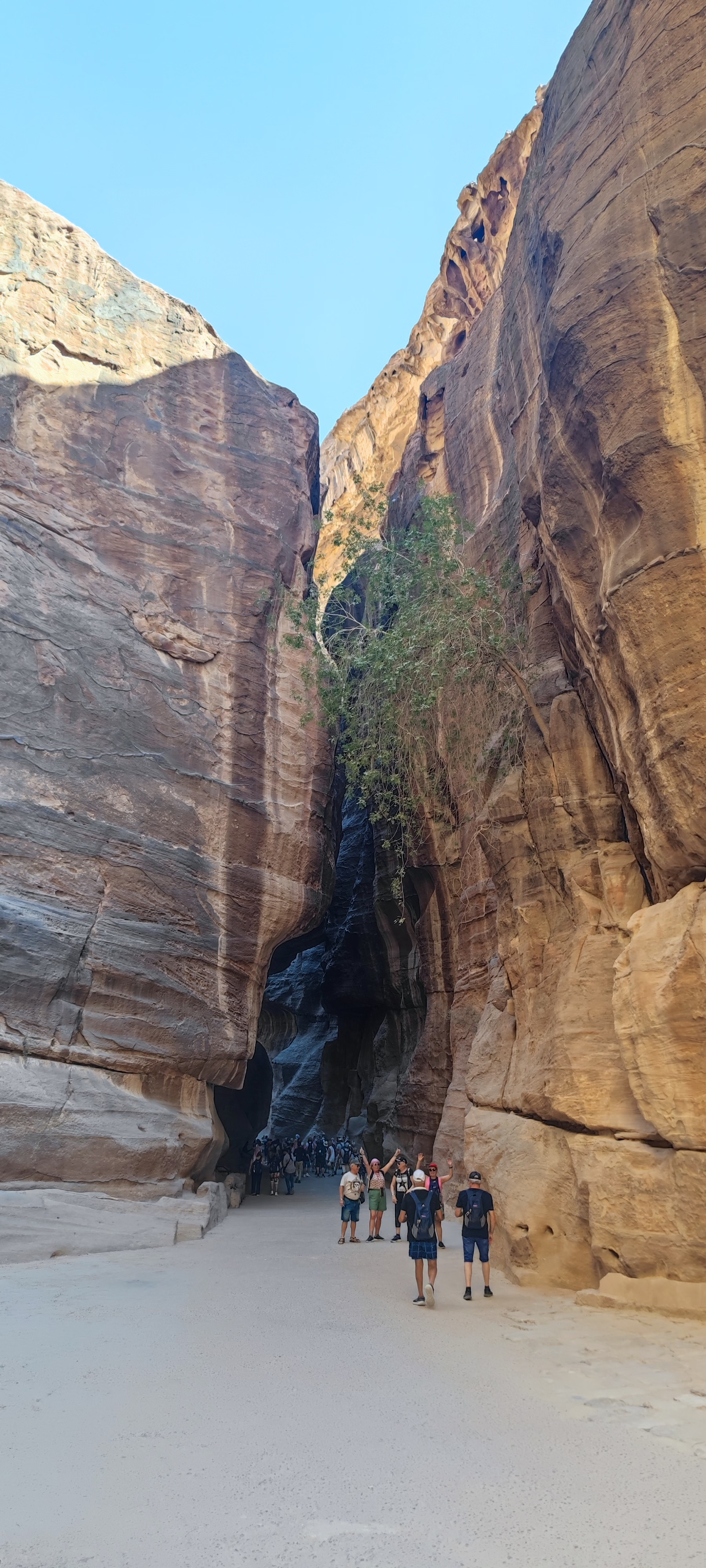
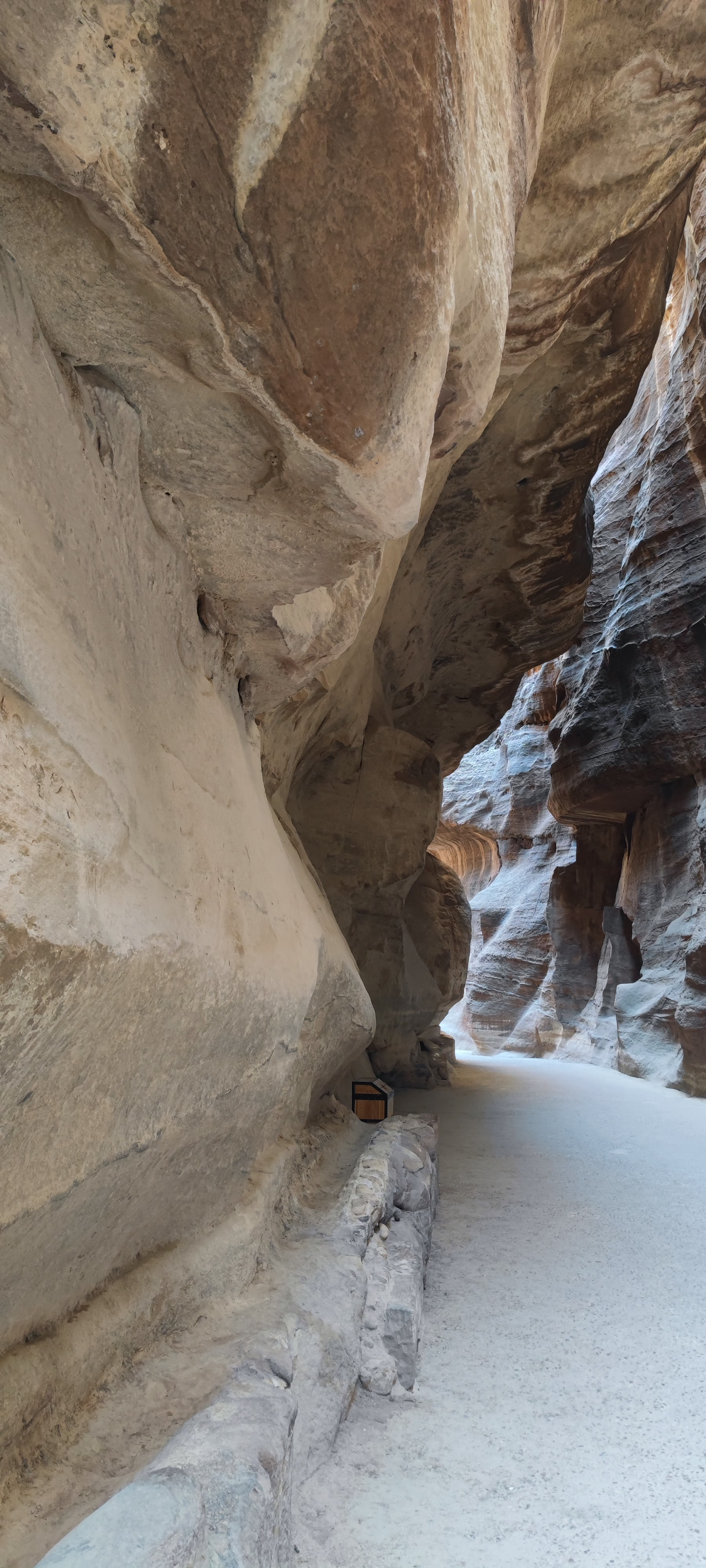
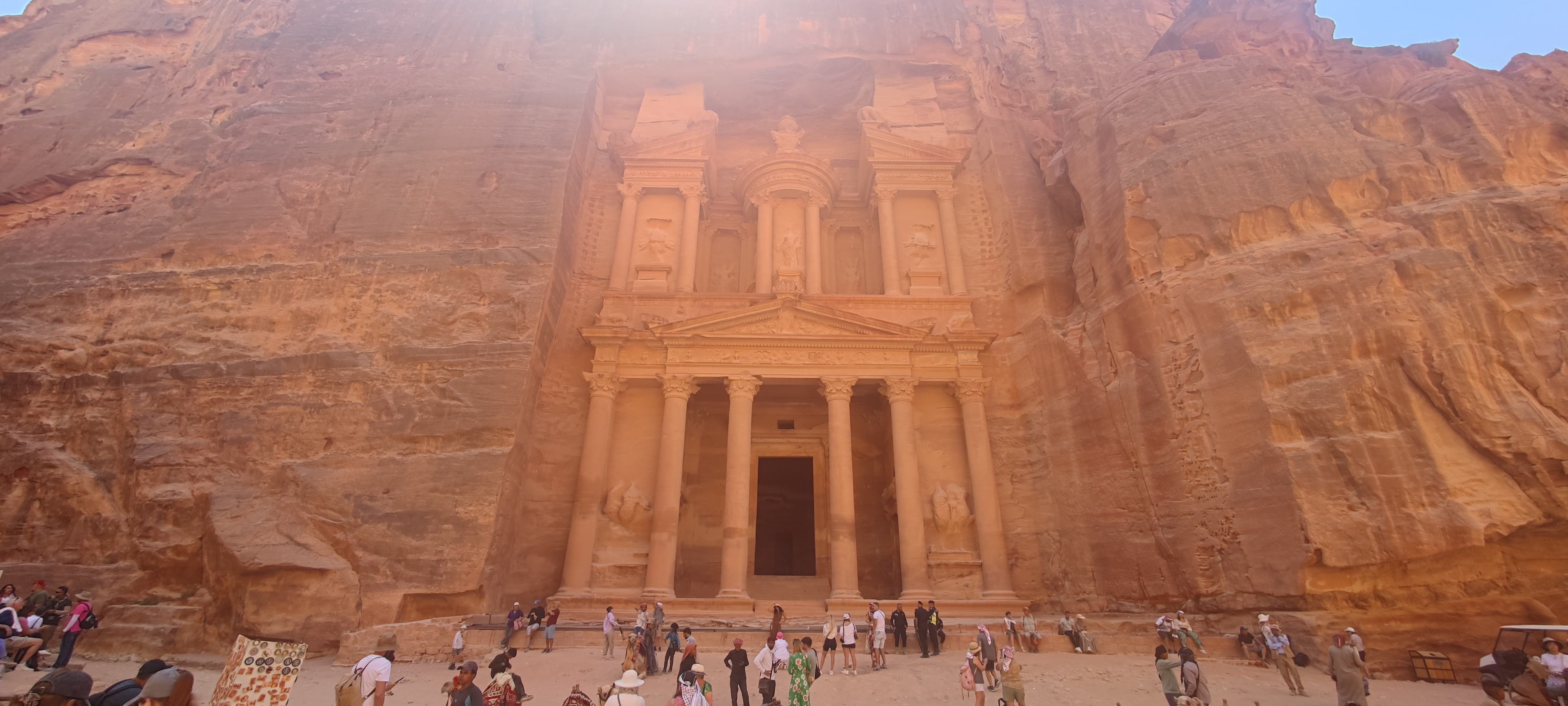
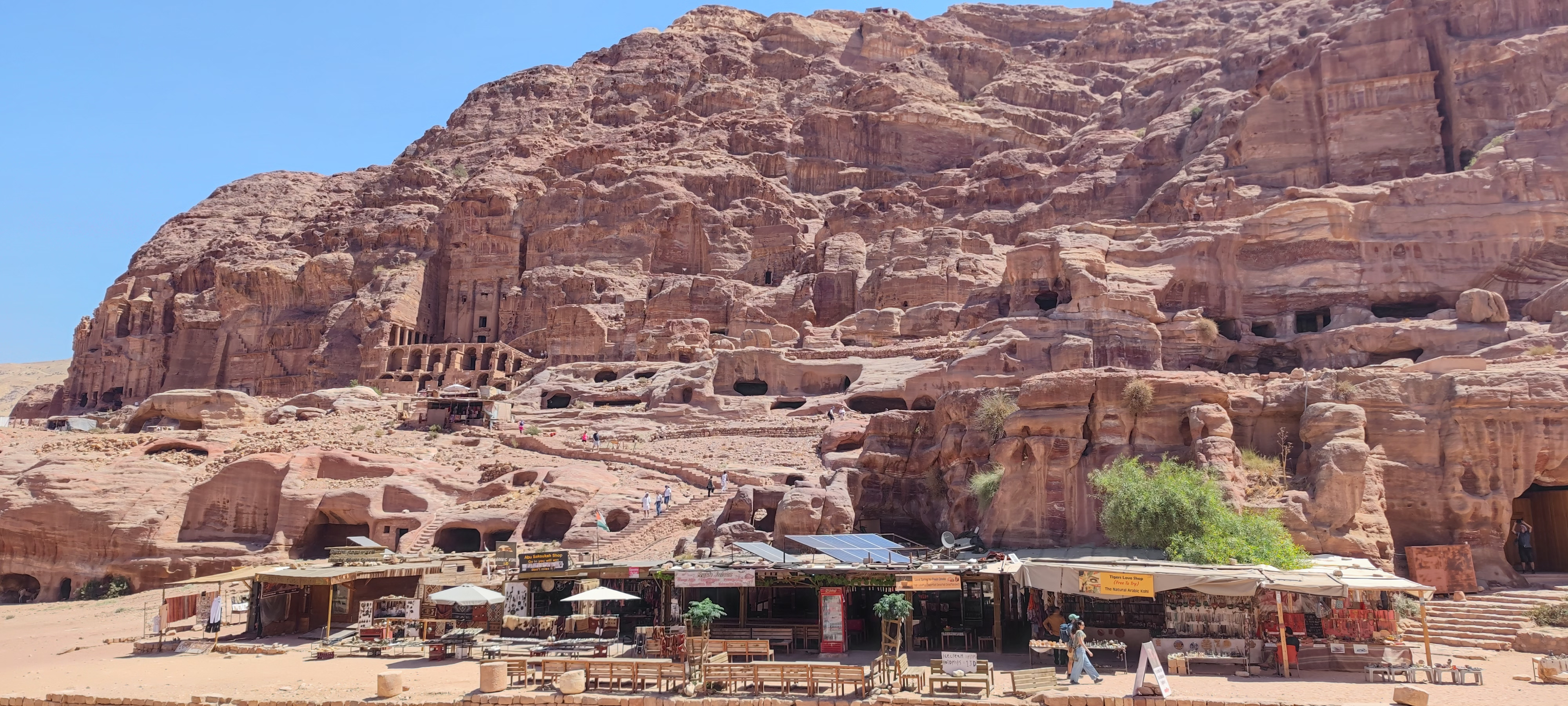
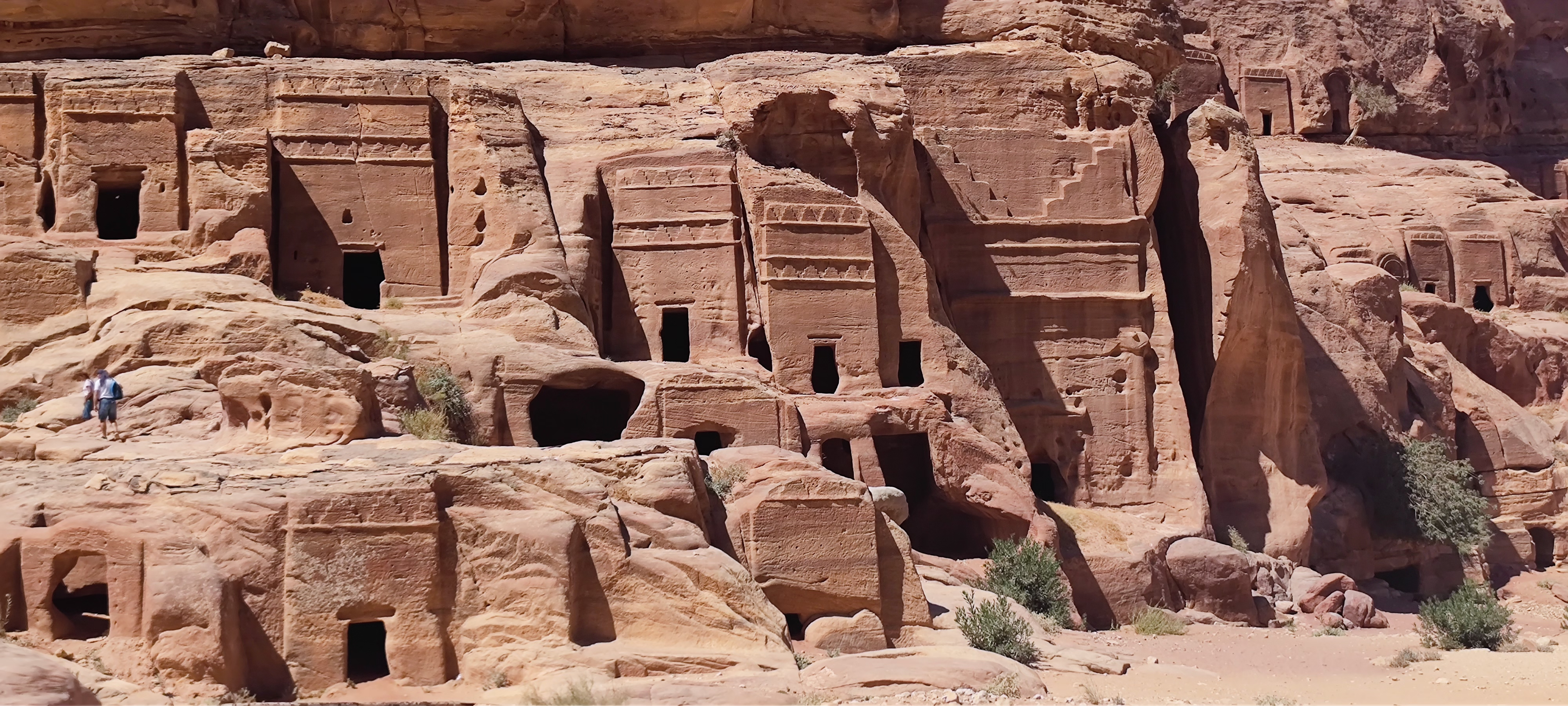
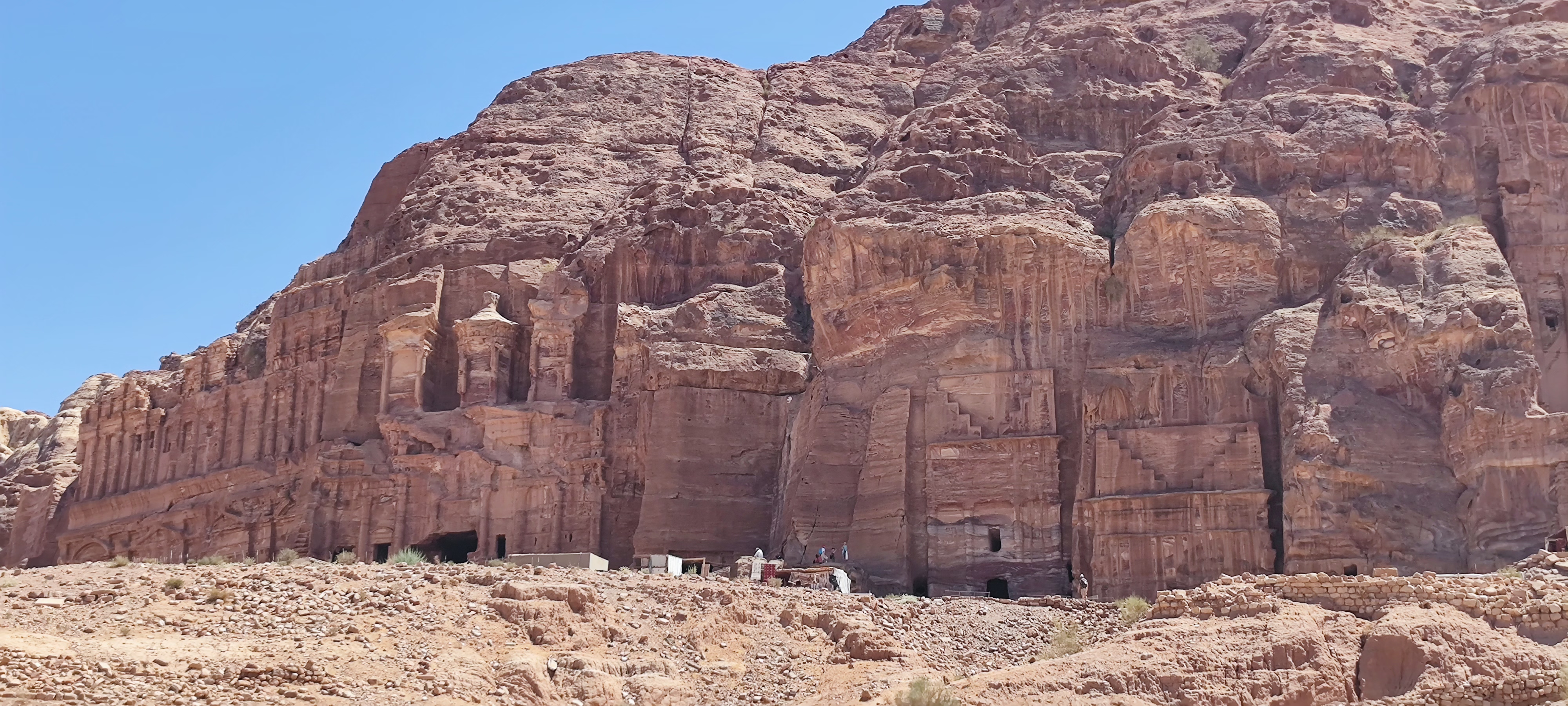
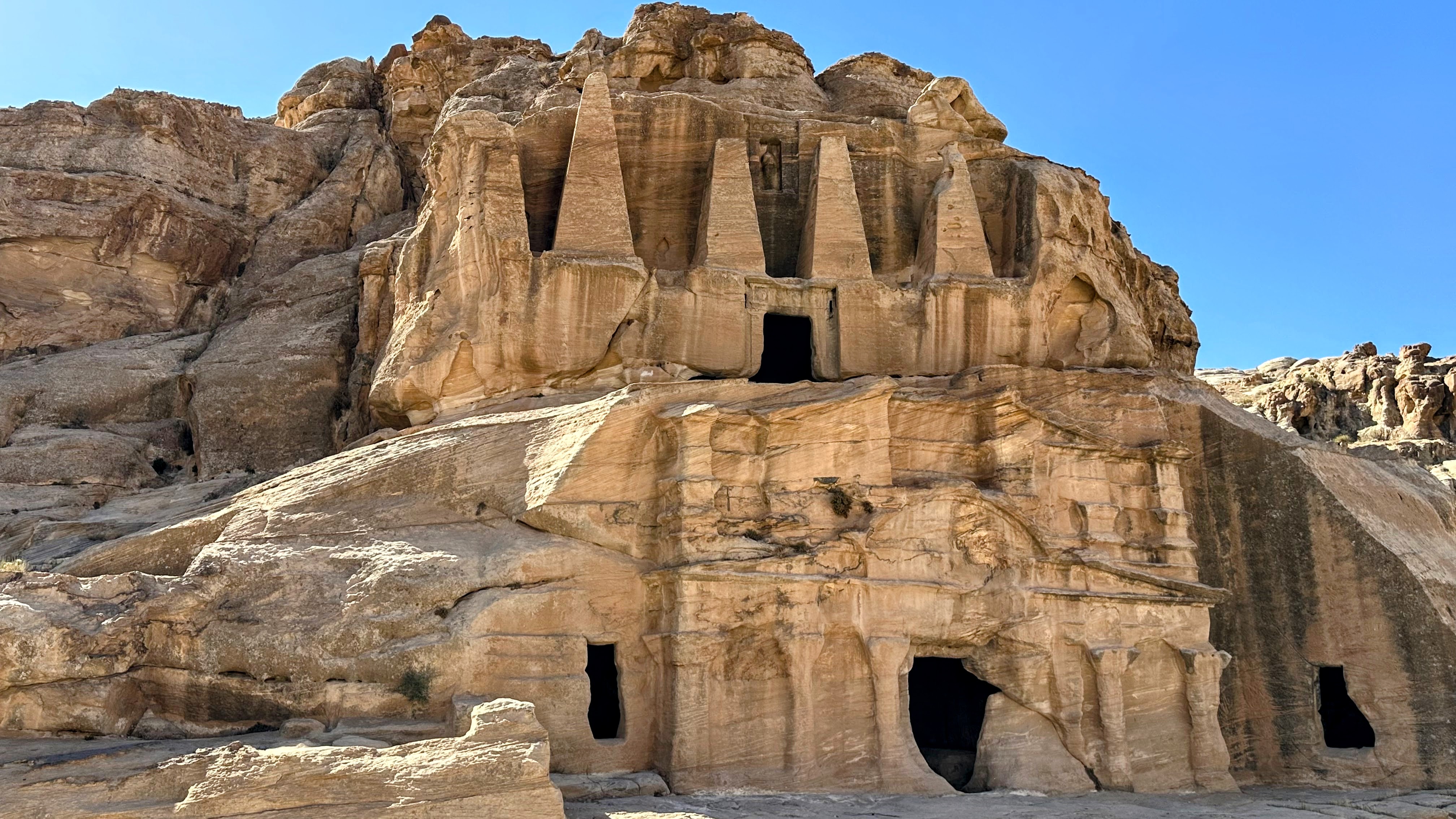
The entrance to Petra leads through a narrow canyon, with high rock walls in red and pink tones. Much of the path is shaded. Along the way, you can see carved temples, tombs, inscriptions, and caves – all built directly into the rock.
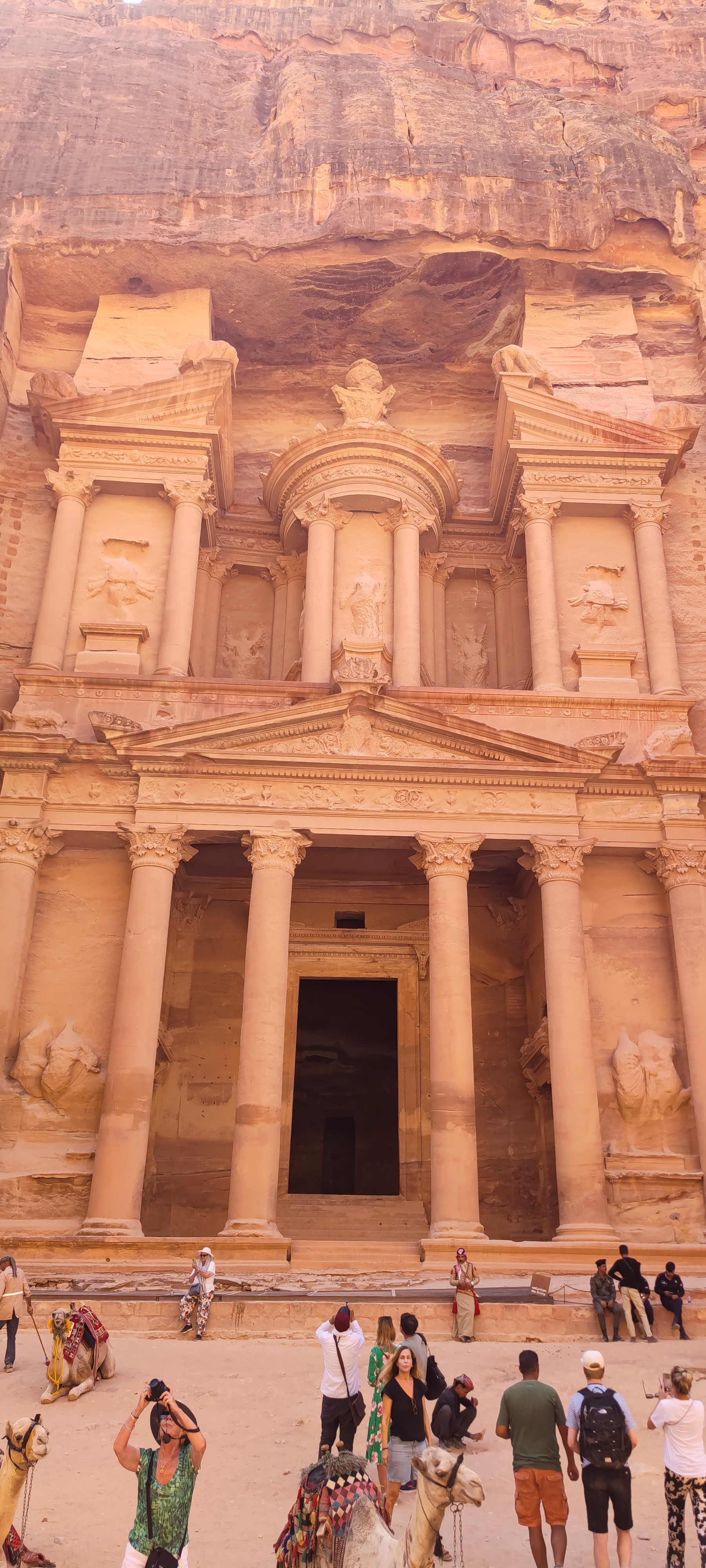
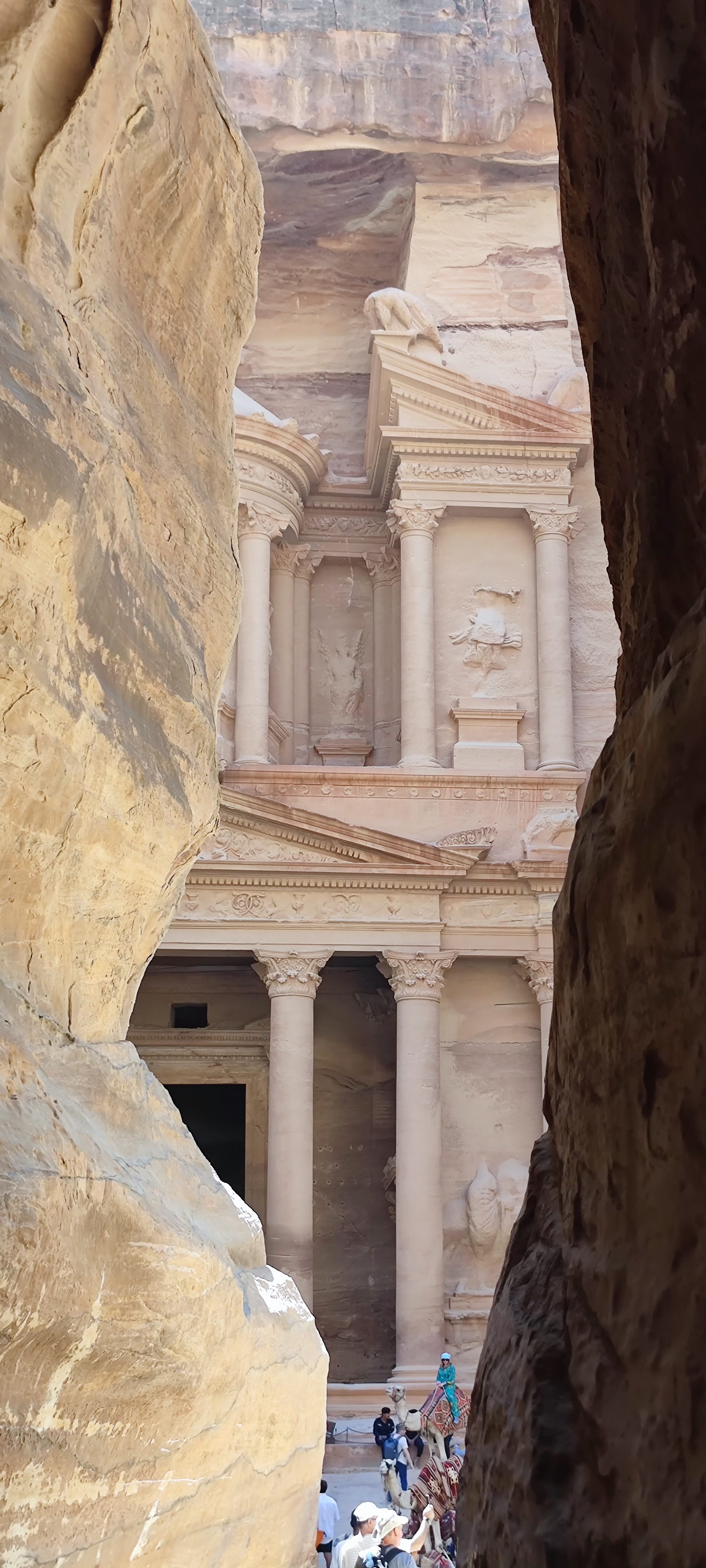
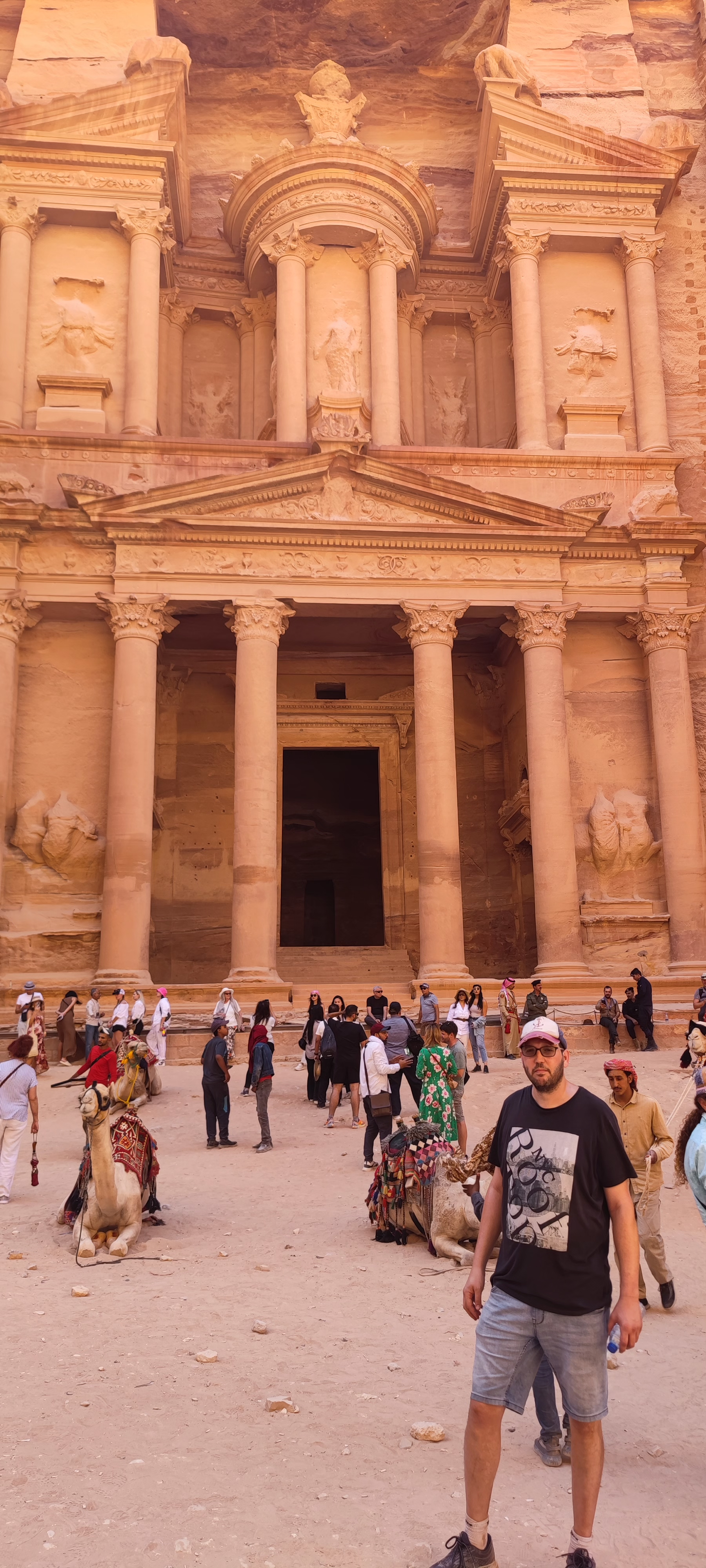
After around 20 minutes of walking, you reach Petra’s most iconic structure: the Treasury (Al-Khazneh). It’s an impressive sight, even after seeing it in countless photos.

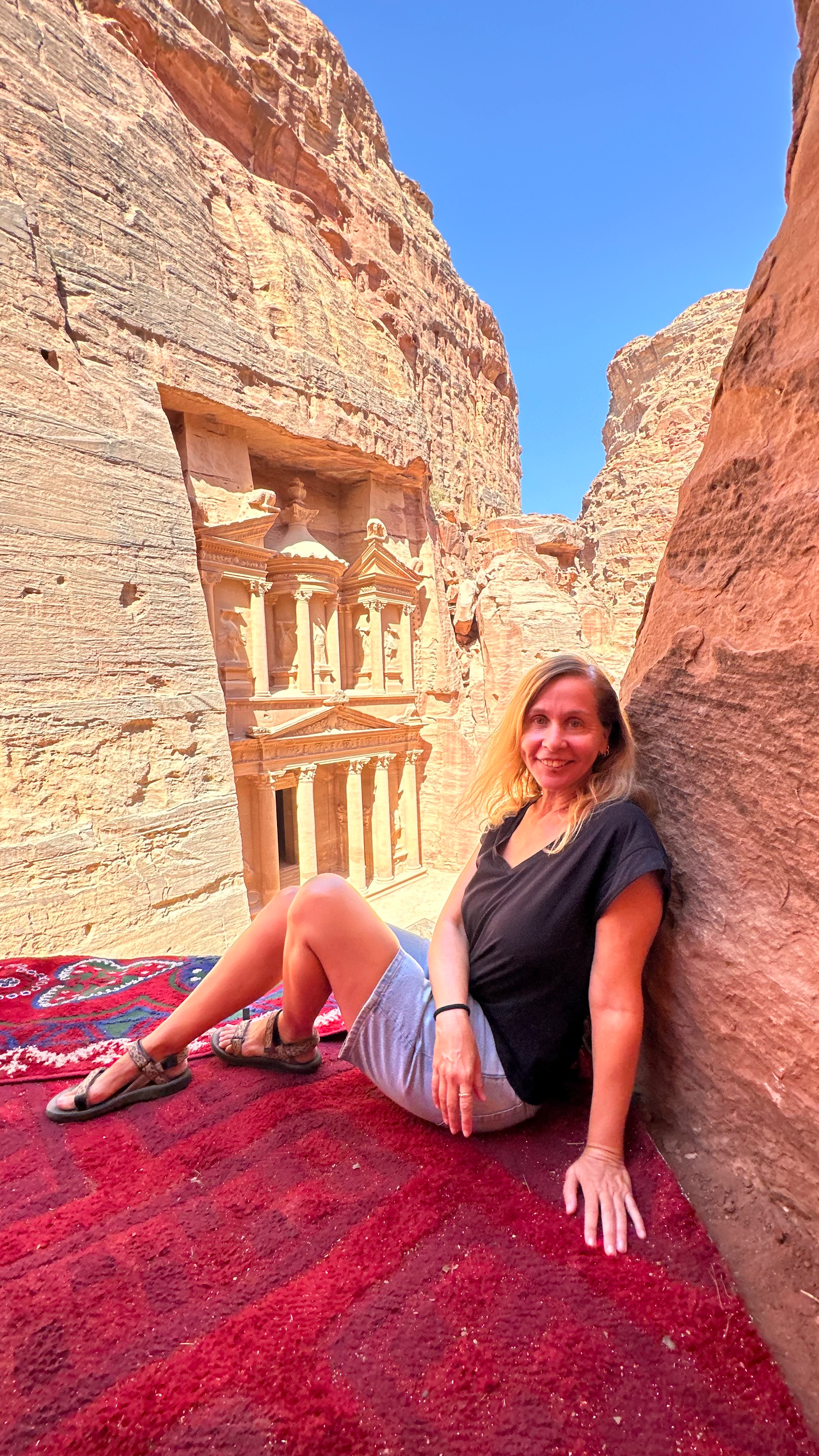
We decided to hike to a viewpoint above the Treasury. This involved paying some local Bedouin guides to take us up a fairly steep path. Although signs advise not to pay for such access, in practice, it seems to be the only way to get there.
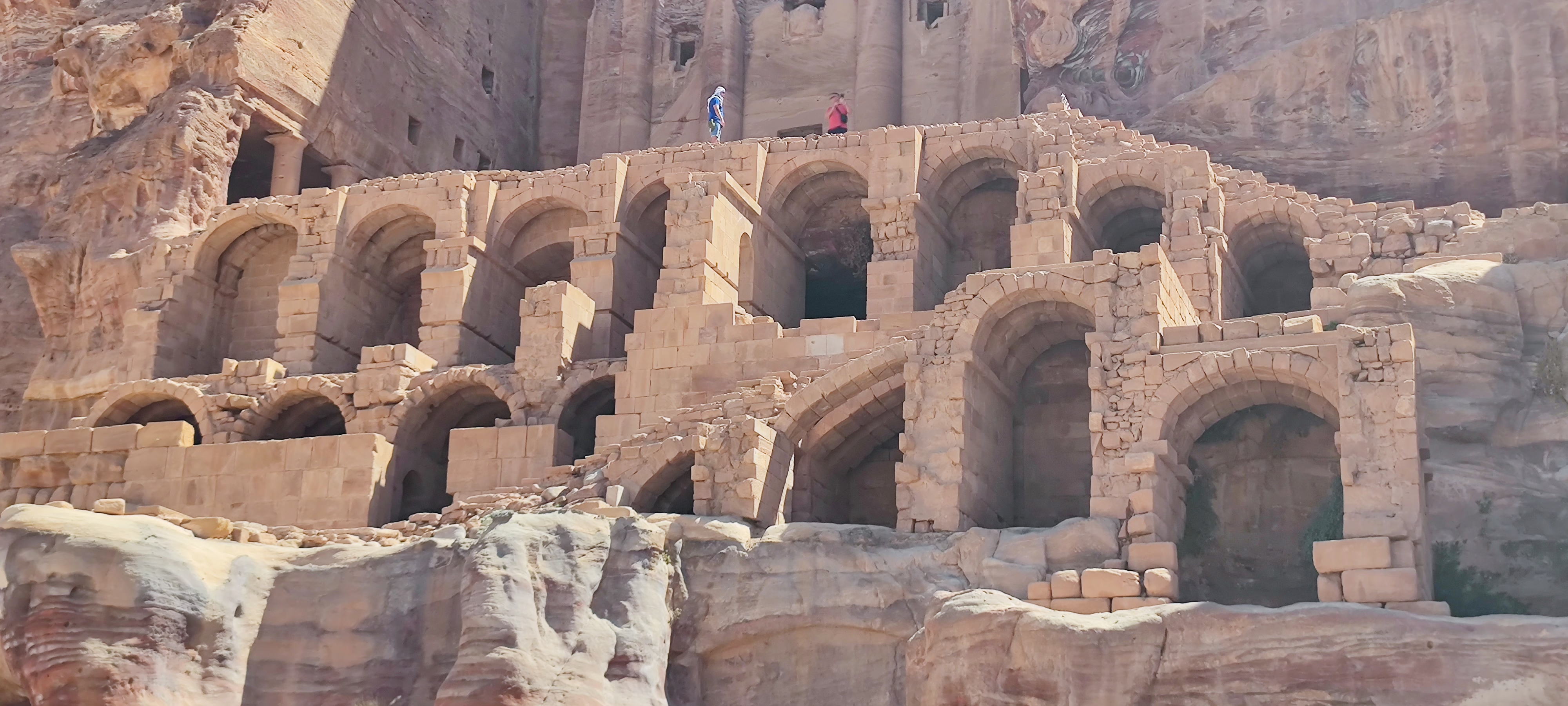
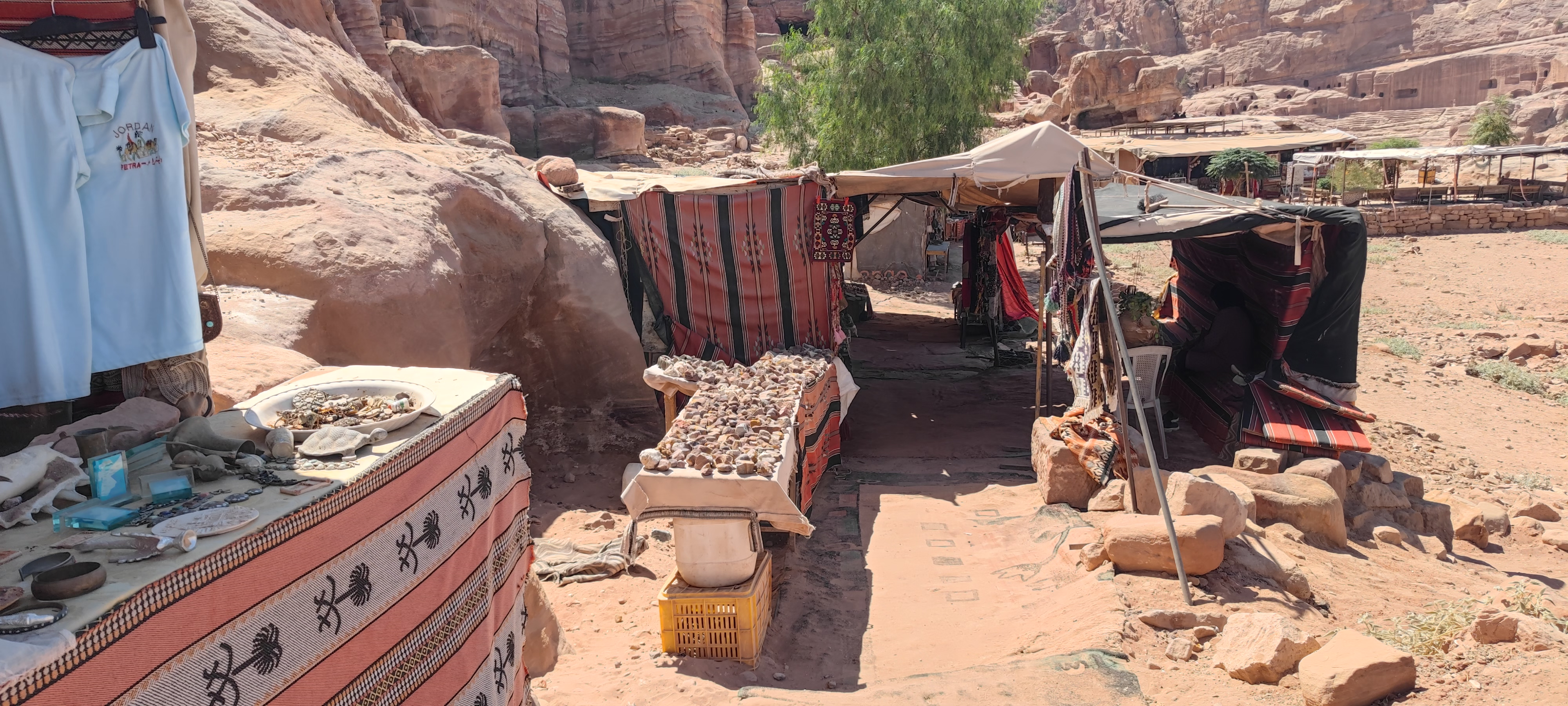
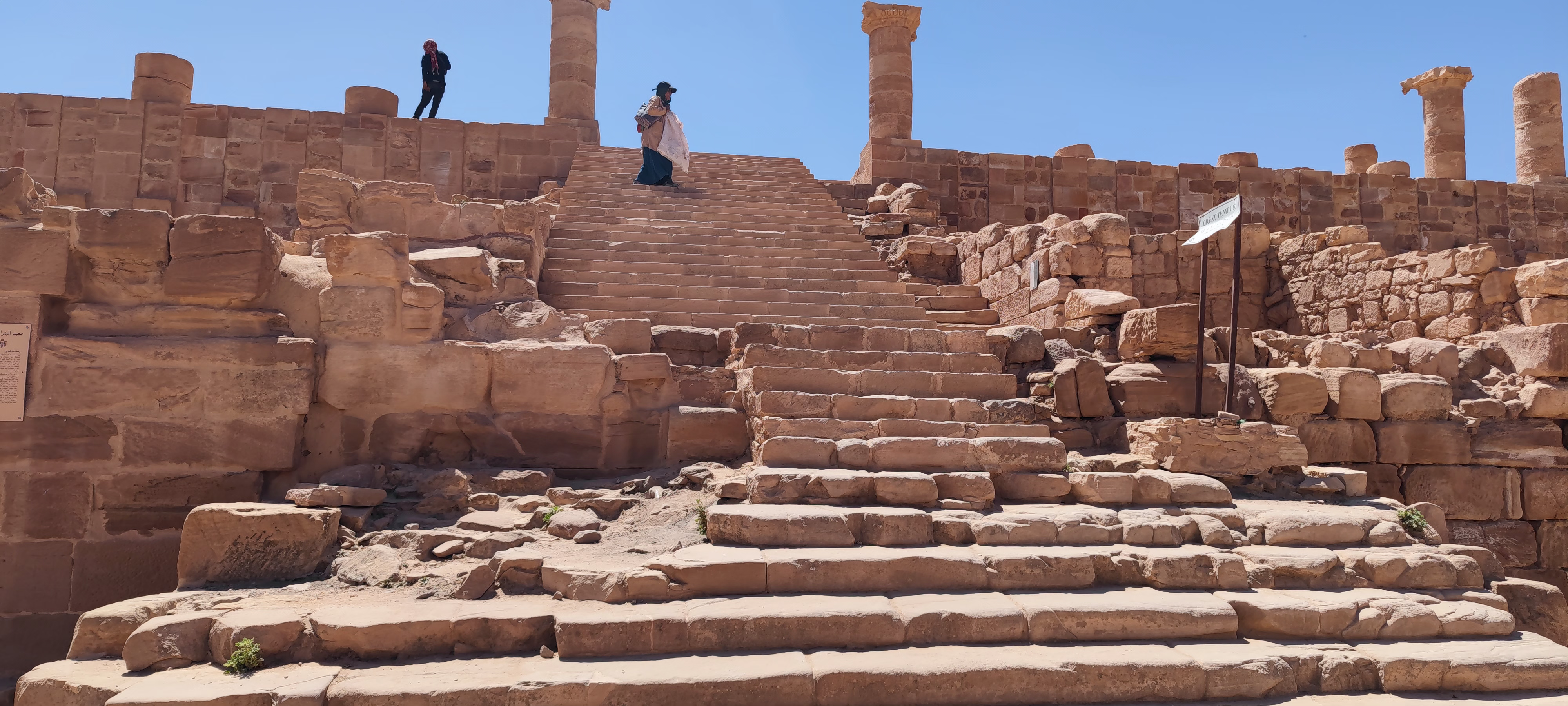
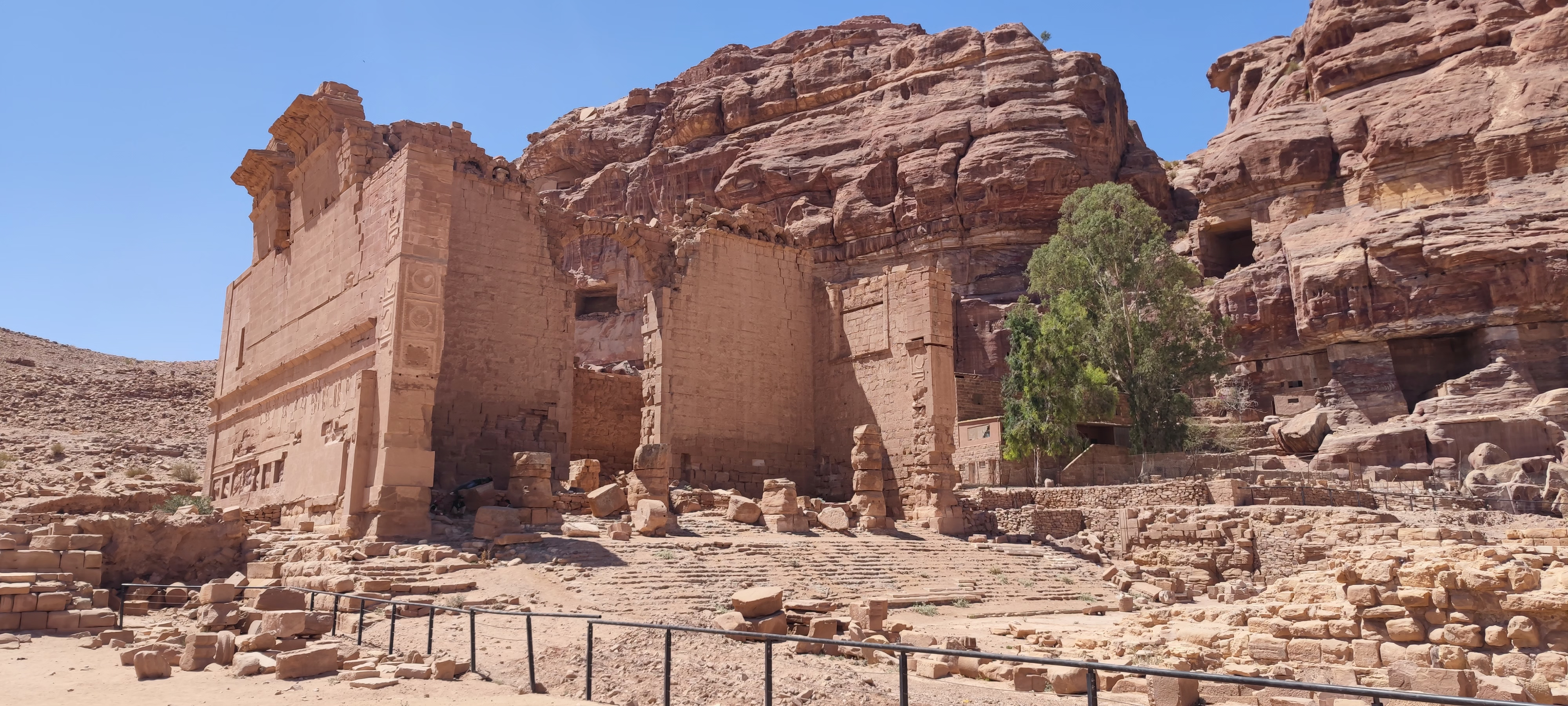
Beyond the Treasury, the trail continues – exposed to the sun, but still full of interesting sites: additional temples, tombs, cliffs, and wide views. Walking back to the entrance takes around an hour. Along the way, there are many vendors offering drinks, souvenirs, and coffee. Prices are very high, and the quality varies – it’s worth planning ahead.
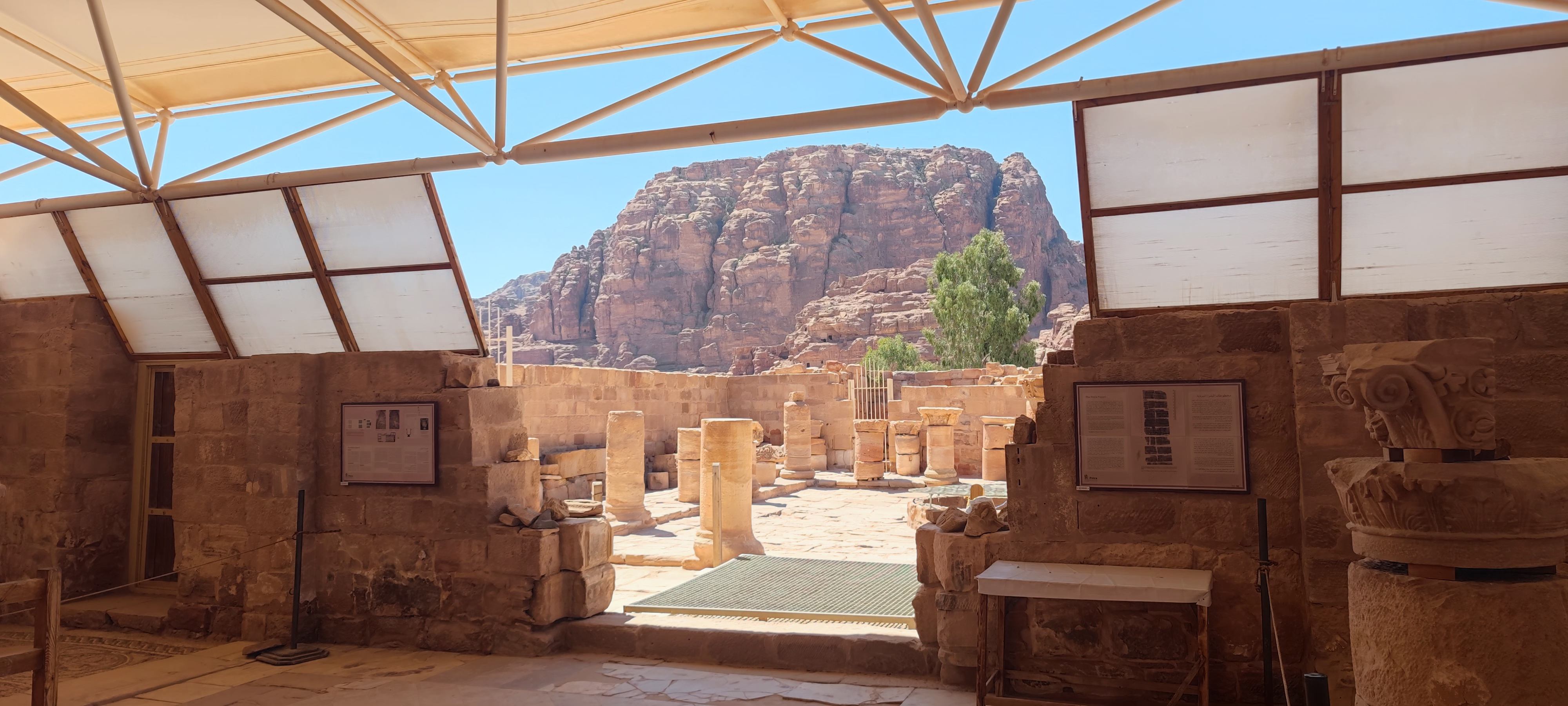
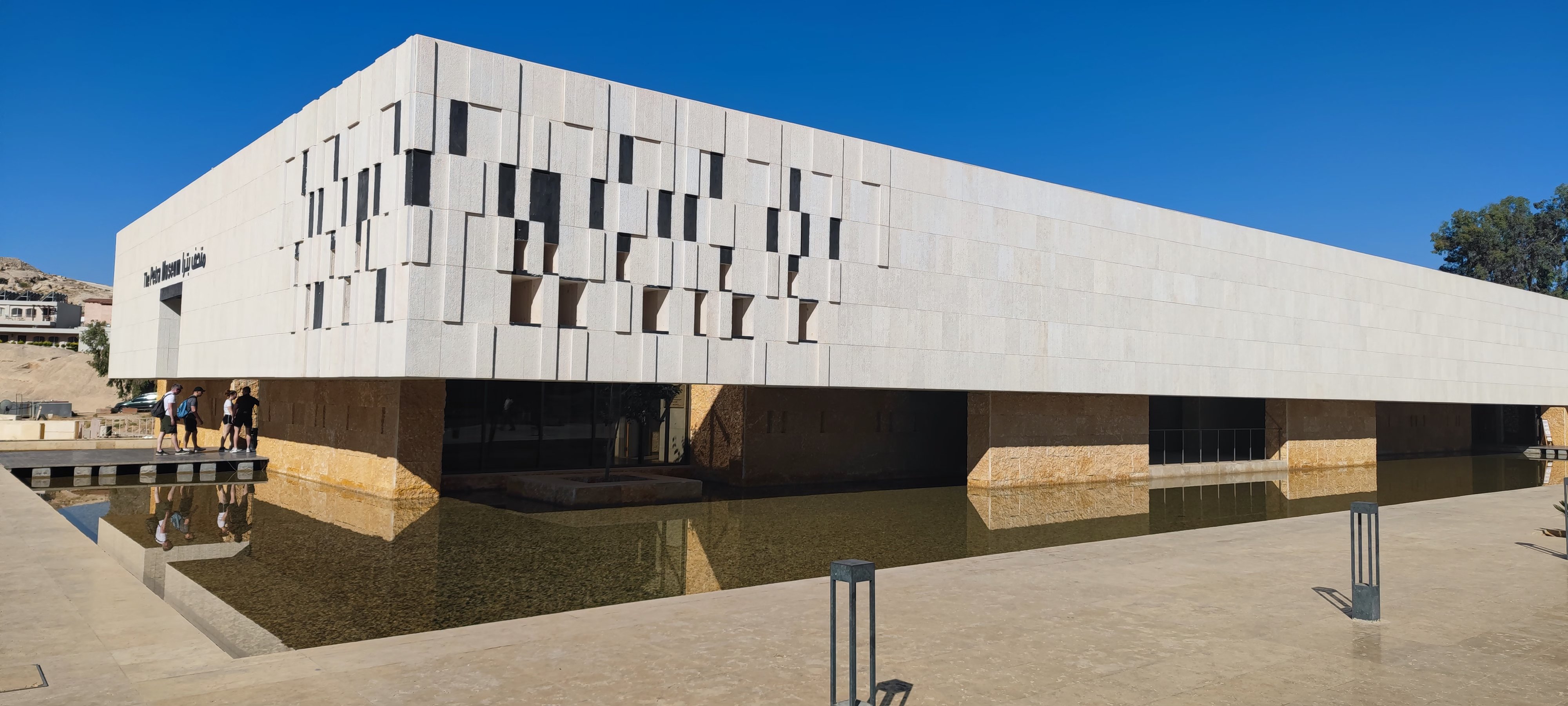
Near the end of the visit, we stopped at the new Petra Museum. It’s relatively small but well-organized and provides helpful historical context about the Nabateans, the city’s rise and fall, and how it was rediscovered.
After the visit, we returned by bus – a two-hour drive back to the border with Israel.


Comments