776 results found with an empty search
- Kfar Kama
Kfar Kama is a fascinating Circassian village. We chose two tours: the Circassian Heritage and Culture Center (which also has a small museum) and the Circassian Museum. We learned fascinating things about the Circassians. I will not tell you everything so you can tour and hear directly from the locals, so just briefly: The Circassian people existed from the fourth century BC. the language they are careful to preserve is based on sounds and imitation of the sounds of nature. They have fascinating customs and great respect for women. A 101-year war between them and Russia ended in genocide and deportation. They were scattered worldwide, and some were brought to Palestine by the Ottomans. In Israel today, about 4,000 Circassians live in two villages. They are Muslims who, in 1956, signed a mutual agreement with Israel. The men serve in the IDF; some women do national service. You watch a short film at the tours, hear explanations, and tour the village. We were there on a wintry day, and along with the inclement weather, the hike in the quiet village (you would not believe how quiet) was terrific. Beyond the fascinating tours, there is lovely food in the village. It was a fascinating, relaxing, and pleasant tour—a window into a not-so-familiar culture. I do not think one must visit both centers. We had time and enjoyed the different stories we heard in both places, but you can choose one. I must point out that David Shawgen, the research director of the Circassian Museum, has vast knowledge. He is a lovely guy, and it was great fun to listen to him and walk with him. For more places in the area press here.
- Getting to Thessaloniki
The International Airport of Thessaloniki is 17 KM from the city center - a 30 minutes drive by car or taxi. A taxi will cost you approximately 20 Euro. You can also take the bus line No. 78 or 78N from the airport to the central Makedonia Bus Station, which goes through the city center. You can purchase a ticket from the tickets machine on the bus.
- Thessaloniki Boardwalk
The boardwalk of Thessaloniki is a top-rated site for locals and visitors. With a large number of restaurants, cafe's and bars open day and night, walking along the boardwalk is an enjoyable experience. Also, don't miss the colorful dried fruits & nuts factory shop! Walking the promenade is a must-do in Thessaloniki – the beautiful sights and the important sites, like the White Tower, Aristotelous Square, and the harbor, are mandatory
- Vlatadon Monastery in Thessaloniki
The only Byzantine monastery left in Thessaloniki, founded in the middle of the 14th century, is on an older building dating to the 11th century. The monastery was founded by Empress Anna Palaiologina and named after two monks: Markos and Dorotheos Vlattis. Inside the monastery, they preserve scripts, manuscripts, and a beautiful collection of historically and artistically valuable Byzantine icons. The monastery's location is 120 meters above sea level, making it a stunning viewpoint - one of the best in the city.
- Trigoniou Tower & The Acropolis Walls of Thessaloniki
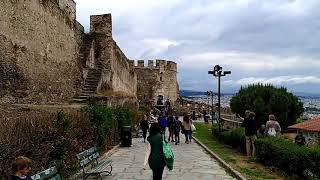
The Acropolis walls, built to defend the city in the early Byzantine period (around 390 AD), were 7 kilometers long, 5 meters thick, and 10 meters high. In addition, some fortresses and towers were built to guard the walls. In the late 19th century, the Ottomans destroyed most of the walls and buildings. The Trigoniou Tower is the most famous and impressive tower on the wall. It was built in the late 15th century to prevent an invasion of the city and help during a siege.
- Prophet Elijah Church Thessaloniki
The Prophet Elijah Church is a UNESCO world heritage site dated back to the 14th-century. The church was built in Byzantine times by the Palaiologan Dynasty and converted into a mosque in 1430 by the Ottoman leader Badrah Mustafa Pasha. Inside the church, you will find colorful wall paintings.
- Ladadika
Ladadike is the historical center of Thessaloniki, full of old buildings next to small houses from different times. The district host one of the unique markets of the city - lots of Greek taverns with great food and Bouzouki music, a beautiful way to enjoy your evening in Thessaloniki. Unlike other main restaurants street in the world, this district isn't a tourist trap. The prices are fair, and many locals fill the restaurants and taverns - so it feels like an authentic Greek experience.
- Thessaloniki Modiano Market
The Modiano market was built on the ruins of the Jewish quarter burned down in the big fire of 1917. The Jewish Architect Eli Modiano design the market, Which opened as a food market in 1925. Today it's a lovely market that offers food products, goods, clothing, and handbags - imitations of famous brands at a small price.
- Thessaloniki Aristotelous Square
Aristotelous Square is the main city square of Thessaloniki. It was planned after the big fire of 1917 and built in the 1950s. Today it serves for cultural events and citizens gathering.
- Thessaloniki Holocaust Memorial
A monument in Freedom Plaza near the harbor and Aristotelouse Square commemorates the deportation and murder of almost 50,000 Jews of Thessaloniki, which took place in 1943. The Jews of Thessaloniki suffered persecutions from the beginning of the German invasion in 1941. Here, in Freedom Plaza, the Nazis gathered the Jews before sending them to the concentration camps. Public Humiliation of Jews in Freedom Plaza. July 11, 1941
- Museum of Byzantine Culture
The Museum of Byzantine Culture has a vibrant display of Byzantine and post-Byzantine culture. The exhibits present more than 3,000 artifacts, carefully chosen from a collection of 46,000 artifacts, dated between the 2nd and the 20th centuries. Some of them are particularly rare. This is the best place to learn all about the Byzantine period of the city.
- Jewish Museum of Thessaloniki
The 2-floors Museum is located in the city center, describes the life of the Jewish community of Thessaloniki through the ages. Until the Holocaust, the Jewish community of Thessaloniki was one of the largest Jewish communities in Europe. With 50,000 citizens, they were more than one-third of the city population and significantly influenced commerce and culture. The Jewish population of the city started to flourish after the Jew's expulsion from Spain in 1492. They established one of the largest and most important Sephardi Jewish communities in the world. The building that hosts the museum was built in 1904 as a commercial building and later hosted the local branch of the Bank of Athens. It was one of the few buildings that survived the big fire of 1917. The museum presents documents, photos, art, and religious objects that characterize the life of the Jews in Thessaloniki. Inside the museum, you can also find a library and research center, hosts scripts and books from the 16th century. A special exhibition is dedicated to the Holocaust, during which almost 50,000 Jews of Thessaloniki was deported to extermination camps.