776 results found with an empty search
- Arthur's Seat in Holyrood Park
Arthur's Seat is the highest peak of the hills in Holyrood Park, right in the center of Edinburgh. Although reaching there demands moderate climbing, it is worth it! Arthur's Seat gives an excellent full panoramic view of the entire city. At the entrance of the park, you'll find a small information center. You can take a map and directions, and start climbing. It took us approximately 35-40 minutes to the top. The only thing we regret was that we didn't take enough water with us. I suggest you won't make the same mistake. Holyrood park himself is a vast green area full of life and travelers. The park is very close to a few of the central city attractions. Tip: there are toilets in the parliament building next to the park. You can enter for free. Free Entry. Website: www.visitparliament.scot The Road to Arthur's Seat Arthur's Seat
- The Scottish Parliament
The former Scottish Parliament existed from the 13th century until the establishment of the United Kingdom when both the Scottish and the English parliaments ceased to exist. Due to the demands of the Scottish people for more local autonomy, the new Scottish Parliament was established in 1999. In 2004 the Parliament moved to this new building next to Holyrood Park. The entrance to the Parliament is free. You can visit the main parliament hall and a small exhibit telling the story of Scottish democracy. There is also a souvenir shop and a lovely coffee shop. Free Entry. Website: www.visitparliament.scot
- The New Town
The New Town of Edinburgh, together with the old town, are a UNESCO world heritage site. The main streets of the New Town are Princes Street, Rose Street, and George Street – all three are very recommended for a visit. Lively avenues, full of restaurants, bars, and shops. The New Town is very close to the Old Town, Princes Street Gardens, and Waverly Station (The City's Central train and buses station).
- Stirling Castle
Some say that Stirling Castle is the most important castle in Scotland. It has an excellent strategic location, guarding the downstream of River Forth and determining the traffic between the north and the south and vice versa. Those significant buildings, dating to the 14th to 16th century, witnessed some brutal wars between England and Scotland. At first, we joined a guided tour, but at some point, we retired and continued to explore alone. I believe it depends on the specific guide. Anyway, we had almost two hours to explore the castle, and it was the exact time we need. Furthermore, it wasn't crowded in the court, so we can wander around as much as we wanted. Website: www.stirlingcastle.scot The Royal Residence View from The Stirling Castle
- The Princess Street Gardens
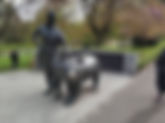
The Princess Street Gardens were built on what was before a swamp made of the sewage of the Old Town. Within the yards, there are many statues and monuments. The most prominent is the Scott Monument, built in honor of Sir Walter Scott: It was surprising to face the memorial of Wojtek, the bear that was adopted by a Polish unit in WWII, grew up, and became one of the corp. He survived the war, and after being released from the army, he lived in Edinburgh zoo. Fantastic story. Free Entry. Wojtek The Princess Street Gardens
- Museum of Edinburgh
The Museum of Edinburgh displays lots of unique items, such as the National Covenant of 1638, personal items of Greyfriars Bobby, the exclusive collection of Field-Marshal Earl Haig, and collections of Scottish decorative arts. Free Entry. Website: www.edinburghmuseums.org.uk/venue/museum-edinburgh
- The People's Story Museum
This unique museum is dedicated to Edinburgh's working-class people. A proper mix of stories, illustrational figures, images, and original objects tells the history of those who usually stay in the dark. Free Entry. Website: www.edinburghmuseums.org.uk/venue/peoples-story-museum
- The Writers' Museum
The Writers' Museum This Museum is dedicated to three enormous Scottish writers: Robert Burns, Sir Walter Scott, and Robert Louis Stevenson. The museum displays portraits and personal objects of the three writers, alongside their life stories. The museum is hosted in a beautiful old house in Lady Stair's Close at the upper side of the Royal Mile. Free Entry. Website: www.edinburghmuseums.org.uk/venue/writers-museum
- Greyfriars Kirkyard
After the Scottish Reformation of 1560, Queen Mary gave the grounds of the former Franciscan monastery to the Edinburgh town council to serve as a cemetery. The building of the new church started in 1602 and continued until 1620. In this church, the National Covenant of Scotland was presented and signed. Although this place got vast importance in the history of the Scottish people, and although many famous people are buried here – the undoubted celebrity of this site is the dog, Bobby. In the 19th century. Bobby guarded his owner's grave for 14 years. Finally, he became a symbol of loyalty and got buried just in front of the cemetery entrance. An actual-size statue of Bobby is located across the road. The cemetery is a quiet and lovely place to walk in. You are walking in the middle of the city, and all you hear are birds, the tweets of the birds. Some Graves are covered with massive iron barriers. It's a prominent reminder of Edinburgh's history of stealing bodies and selling them to the School of Anatomy (They had to ban the body trade by law). I was inquisitive about the kirk, but it's open only at 10:30, and I had some other places to explore. So it will have to was for my next visit to the town. Bobby Greyfriars Greyfriars Kirkyard
- The National Museum of Scotland
The National Museum of Scotland is a vast and surprising museum that covers lots of subjects: science, nature, cultures, arts, and the history of Scotland. At first, I thought I'd make a quick round at nature & science sections (which I can see in many other museums) and leave enough time for the history section. But things didn't work as I planned. So instead, the nature gallery was excellent! There are great clear explanations about so many natural phenomena, with lots of fun illustrations and games that you can quickly lose yourself. I didn't have time to explore the art galleries, and after 3.5 hours, I only checked half of the six History of Scotland galleries. It's a place you can visit for a whole day. The museum has an app: Highlights, which helps navigate this massive museum and send you directly to the essential items. Among other significant items and displays, you will find some highlights like Dolly, the Sheep, a 12 meter-long Tyrannosaurus rex skeleton, Ching Ching – a stuffed famous Panda, an authentic steam engine, and a lot more. The history galleries are full of stories and items. I think that visiting such a museum is essential to understand the roots and values of the local society. Moreover, it helps to better understand all the other sites you visit, so I'm usually trying to visit the local museum as soon as possible. Super Recommended. The entrance is free. Website: www.nms.ac.uk
- Edinburgh Castle
The most prominent landmark in the skyline of Edinburgh. A Huge fortress located on Castle Rock, which served as a royal castle from the 12th century. The castle was involved in many conflicts, and it has a significant part in Scottish history. Some museums operate inside the castle building: The War Museum, a couple of Regiment museums; The One O'clock Gun exhibition; the Royal apartments; and the Main Hall. The most impressive building serves now as The Scottish National War Memorial. The biggest attraction of the castle is the Honours of Scotland: the oldest set of crown jewels dating to the 15th and 16th centuries. We waited in line for approximately 30 minutes to see them. Although this castle is enormous, it is very crowded. I'm glad I bought tickets online because the line to the ticket office was very long. I truly recommend buying tickets online, prioritizing the opening hour, and then going directly to see the Honours. The view from the castle is outstanding. Website: www.edinburghcastle.scot Edinburgh Castle View from Edinburgh Castle
- Scott Monument
The Scott Monument is one of the most significant monuments to a writer globally – more than 60 meters high. The memorial is located near the Waverley Station = the main train and bus station of Edinburgh, called after Walter Scott's Waverley Novels. The monument is right next to Princess Gardens Street. It was built in the 1840s, after the death of Scott in 1832. In the middle of the memorial, the statue of Scott was designed by John Steel. The monument himself was designed by George Meikle Kemp.